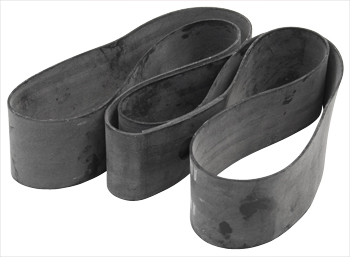
26x2 1/2 Coker Classic Clincher Blackwall Tire
In addition to this item, Coker Tire Company offers a great selection of tire fitments for antique motorcycles. Coker Motorcycle tires are available in may popular sizes and styles and are backed by our life of the tread warranty. Whitewall Motorcycle tires are available in 5.00-16 and other very popular sizes in this product line. Tread and sidewall designs vary by size and can be viewed individually in our web store. Please note that dimensions listed tread width, section width and overall diameter are non-scientific and based on an inflated tire, mounted on a wheel. Dimensions may vary due to rim width and inflation pressure.
Bias Ply Construction
Bias ply tire construction is a method that was used from the 1900's through the 1970's on passenger cars and light trucks. Bias ply tires feature ply cords that run at a 45 degree angle to the bead, and overlap in a crisscross pattern, depending on how many ply layers are used. This creates a strong tire, but bias ply tires have a tendency to follow breaks or ruts in the pavement. Bias ply tires are the most authentic choice for classic car restorations and traditional hot rod builds. Coker Tire offers a huge variety of bias ply tires for many applications.
Coker Classic Clincher Tires
Designed for cars and motorcycles using a clincher style rim, this Coker Classic product line offers authentic looks and fitment. Available in classic tread styles and all-white design, this is a product line like no other.
Coker Classic Brand Collector Vehicle Tires
Coker Tire was founded in 1958, focused on supplying the collector vehicle market with authentic tires. The Coker Classic brand is a favorite among car restorers and enthusiasts around the world. Coker was the first to develop the wide whitewall radial, and it's still one of its most popular product lines to this day. Coker Classic tires are offered in both bias ply and radial construction, using modern materials to ensure proper fitment and handling for your collector vehicle.
Please Note
- Our New Old Stock tires are offered for display purposes only. They offer all of the authentic details of their brand new siblings at a reduced cost. NOS tires from Coker Tire Company are not intended for use on the road and are offered with no warranty.
| SKU | 77560 |
|---|---|
| Weight | 5.000000 |
| Brand | Coker Classic |
| Tire Series | Coker Classic Clincher |
| Rim Diameter | 21 inch |
| Tire Construction | Bias Ply |
| Sidewall Style | Blackwall |
| Product Size | 26x2 1/2 |
| Availability Date | 2010-08-09T00:00:00Z |
26x2 1/2 Coker Classic Clincher Blackwall Bias Ply Tire
Frequently Raised Question
Fitment & Compatibility ▼
Will the Coker Classic Cycle Clincher New Old Stock 26x2.50 fit my clincher-style rim? ▼
The Coker Classic Cycle Clincher New Old Stock 26x2.50 is designed specifically for vehicles, motorcycles, and cycles equipped with clincher-style rims. Before purchasing, verify that your wheel uses a true clincher design rather than a later drop-center rim. The tire's construction and bead profile are intended to match the unique characteristics of clincher wheels.
Many antique vehicles have undergone repairs or modifications over the decades, so original fitment cannot always be assumed. Measuring the wheel and confirming its design can help avoid installation issues. For collectors focused on historical accuracy, matching the correct clincher tire and rim combination is one of the most important restoration details.
Will the Coker Classic Cycle Clincher New Old Stock 26x2.50 work for my antique motorcycle restoration? ▼
The product description identifies the Coker Classic Cycle Clincher New Old Stock 26x2.50 as part of Coker Tire's antique motorcycle offerings. It is most appropriate for restoration projects that originally used a 26x2.50 clincher tire and where authenticity is a higher priority than operational road use.
Because antique motorcycles often have replacement wheels or altered components, buyers should verify wheel size and rim style before ordering. Matching the tire to factory specifications can improve restoration accuracy and presentation. For display-oriented projects, this tire helps recreate the period-correct appearance expected by collectors and restoration judges.
How can I confirm Coker Classic Cycle Clincher New Old Stock 26x2.50 compatibility before ordering? ▼
The best approach is to compare your wheel dimensions and original vehicle specifications against the tire's listed size and intended clincher-rim application. Measuring the existing wheel and inspecting the rim profile can help confirm whether the tire is likely to fit correctly.
It is also useful to review restoration manuals, period photographs, and factory documentation when available. Antique vehicles often differ from their original configuration after decades of ownership. Taking time to verify compatibility before purchase reduces the likelihood of ordering a display tire that does not match the vehicle's intended wheel setup.
Tire Size Equivalents & Conversions ▼
What does the 26x2.50 size mean on the Coker Classic Cycle Clincher New Old Stock? ▼
The 26x2.50 designation represents a traditional tire sizing format commonly found on antique motorcycles and cycles. The first number references the nominal overall diameter, while the second number identifies the nominal tire width. This sizing system predates many modern tire measurement standards.
Because vintage sizing conventions vary from modern systems, buyers should avoid assuming direct equivalence to contemporary tire sizes. Matching the tire to original vehicle specifications is usually the most reliable method. Restoration documentation and original tire markings can help verify whether 26x2.50 is the correct replacement size.
Can the Coker Classic Cycle Clincher New Old Stock 26x2.50 replace another 26x2.50 clincher tire? ▼
In many restoration applications, the Coker Classic Cycle Clincher New Old Stock 26x2.50 can serve as a replacement for another tire carrying the same nominal size. Matching size designations is an important starting point when evaluating compatibility.
However, antique tires were not always produced according to modern dimensional standards. Small differences in manufacturing practices, rim dimensions, and historical specifications may influence fit. Buyers should compare wheel measurements and original documentation whenever possible to confirm the tire aligns with the intended restoration requirements.
Performance & Use Case ▼
Is the Coker Classic Cycle Clincher New Old Stock 26x2.50 intended for road use? ▼
No. The product description specifically states that the Coker Classic Cycle Clincher New Old Stock 26x2.50 is offered for display purposes only and is not intended for road use. Buyers should evaluate this product as a restoration and presentation component rather than a tire designed for active riding or driving.
This distinction is important when choosing between authenticity and usability. While the tire provides period-correct appearance and historical detail, it is not sold as a roadworthy product and carries no warranty. Collectors restoring museum pieces, showroom displays, or static exhibits are the primary audience for this New Old Stock offering.
What type of collector is the Coker Classic Cycle Clincher New Old Stock 26x2.50 designed for? ▼
The Coker Classic Cycle Clincher New Old Stock 26x2.50 is best suited for collectors who prioritize historical accuracy and authentic appearance. Museum curators, concours participants, antique motorcycle restorers, and owners of static display vehicles are among the most likely buyers.
Because the tire is intended only for display purposes, it is not the right choice for enthusiasts planning to ride or drive their vehicle regularly. Instead, its value comes from preserving original visual character. For restorations where authenticity is judged closely, the correct tire style can contribute significantly to the overall presentation.
How does the Coker Classic Cycle Clincher New Old Stock 26x2.50 support authentic vehicle presentation? ▼
Authenticity is one of the primary reasons collectors choose the Coker Classic Cycle Clincher New Old Stock 26x2.50. The tire recreates the appearance associated with early clincher-rim vehicles and motorcycles, helping restorers achieve a historically accurate look.
Tires occupy a large visual area and can dramatically influence how a completed restoration is perceived. Even a meticulously restored vehicle may appear incorrect when equipped with modern-looking replacements. By maintaining period-correct proportions and styling, this tire helps support museum-quality displays and collector-focused restoration projects.
Construction, Durability & Load Capacity ▼
What type of construction does the Coker Classic Cycle Clincher New Old Stock 26x2.50 use? ▼
The Coker Classic Cycle Clincher New Old Stock 26x2.50 features bias ply construction. According to the product description, bias ply tires use overlapping cord plies arranged in a crisscross pattern at approximately 45-degree angles to the bead.
Bias ply construction was widely used throughout much of automotive and motorcycle history and remains an important feature for authentic restorations. Because the tire is intended for display purposes, buyers are generally selecting it for historical accuracy rather than for the performance characteristics associated with modern radial tire designs.
Why is bias ply construction important on the Coker Classic Cycle Clincher New Old Stock 26x2.50? ▼
Bias ply construction helps preserve the visual and historical authenticity expected from period-correct restorations. Many antique motorcycles and early vehicles originally used bias ply tires, making this construction style an important part of recreating the original appearance.
Collectors seeking accurate restorations often evaluate more than size alone. Construction type can influence sidewall shape, tire profile, and overall presentation. By maintaining bias ply construction, the Coker Classic Cycle Clincher New Old Stock 26x2.50 aligns more closely with the design characteristics associated with early clincher-rim applications.
Installation & Maintenance ▼
Should I inspect my clincher rim before installing Coker Classic Cycle Clincher New Old Stock 26x2.50? ▼
Yes. A thorough rim inspection is an important step before mounting the Coker Classic Cycle Clincher New Old Stock 26x2.50. Antique wheels may have corrosion, deformation, previous repairs, or age-related wear that could affect how the tire fits and appears once installed.
Collectors should examine the rim for structural integrity, cleanliness, and proper clincher-rim geometry. Even on display vehicles, damaged wheels can create mounting difficulties or affect presentation quality. Addressing wheel issues before installation helps support a more accurate and visually appealing restoration outcome.
Does Coker Classic Cycle Clincher New Old Stock 26x2.50 require a tube? ▼
The product page references compatible tubes among the related products, which suggests that tube-type installations are commonly associated with this style of tire and wheel assembly. Buyers should verify the requirements of their specific wheel and restoration application before proceeding.
Many antique clincher-rim systems historically relied on tube-type configurations. Selecting the proper tube size and valve stem arrangement can contribute to a cleaner installation and more authentic appearance. Reviewing wheel specifications and restoration documentation can help determine the most appropriate setup.
How can inflation pressure affect the appearance of Coker Classic Cycle Clincher New Old Stock 26x2.50? ▼
The product description notes that tire dimensions can vary depending on inflation pressure. Changes in pressure may influence the tire's width, profile shape, and overall visual presentation once mounted on the wheel.
This consideration is especially important for museum displays and concours restorations where appearance is closely evaluated. A tire inflated differently than expected may alter the stance or proportions of the vehicle. Taking time to establish appropriate display pressure can help achieve a look that aligns more closely with restoration goals.
Write Your Own Review
OTHER STUFF YOU MAY LIKE
Check items to add to the cart or

Customers Also Bought