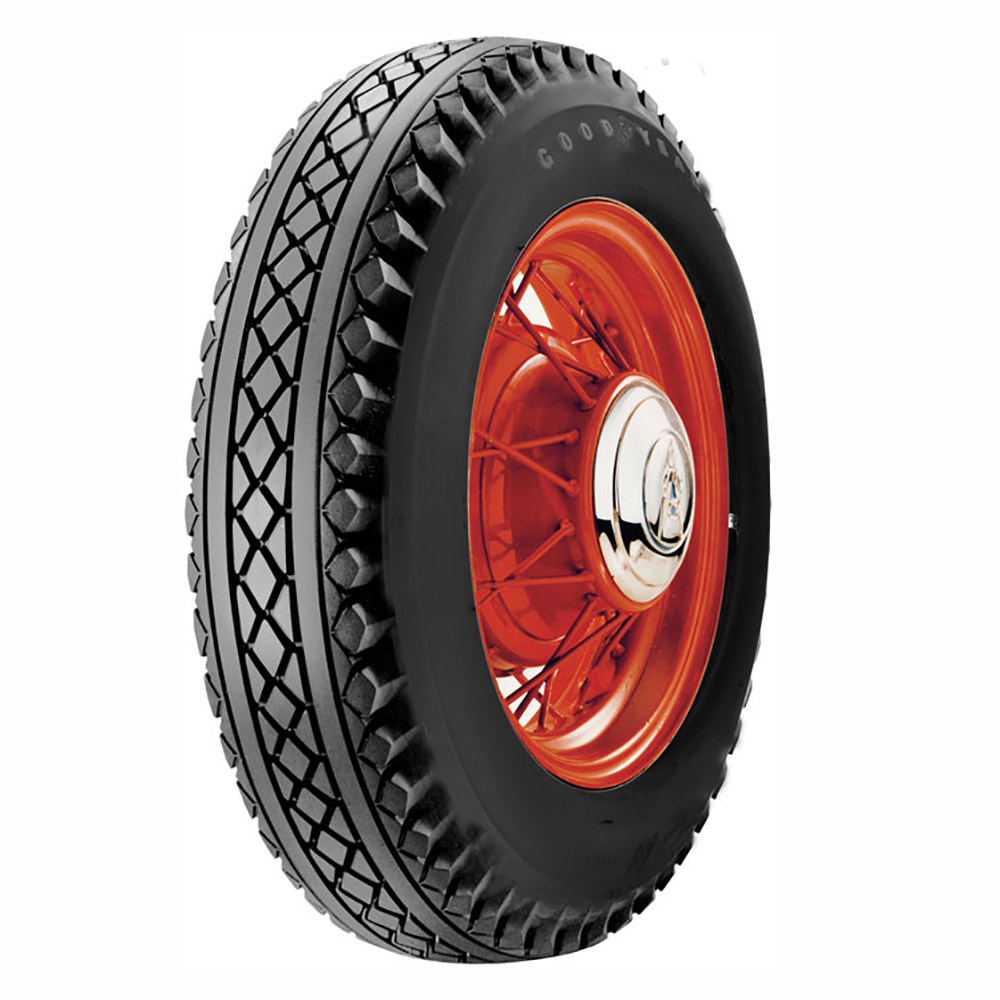
600-16 Firestone Classic Blackwall Tire
Coker Tire Company offers a huge selection of authentic Firestone Classic tires. Firestone has the largest line of classic tires in the world. These Firestone Bias Ply tires boast the original Firestone Zig Zag tread pattern in blackwall. They're made in the original molds using modern materials in the USA. Available in 15- to 20-inch sizes for literally hundreds of classic applications. This Firestone Classic tire has a beautifully detailed pie crust upper sidewall.
Blackwall Tire
Since the introduction of carbon black rocked the tire industry, the original recipe for most tires has been a solid black sidewall. For classics and collector cars alike, it's hard to beat the no-nonsense appeal of a classic blackwall style tire. British sports car, classic truck and even hot rod enthusiasts love the way a nice period correct blackwall tire looks on their vehicles.
Bias Ply Construction
Bias ply tire construction is a method that was used from the 1900's through the 1970's on passenger cars and light trucks. Bias ply tires feature ply cords that run at a 45 degree angle to the bead, and overlap in a crisscross pattern, depending on how many ply layers are used. This creates a strong tire, but bias ply tires have a tendency to follow breaks or ruts in the pavement. Bias ply tires are the most authentic choice for classic car restorations and traditional hot rod builds. Coker Tire offers a huge variety of bias ply tires for many applications.
Firestone Classic Bias Ply Tires
Firestone Classic bias ply tires feature dozens of sizes and styles, making it one of the most popular authentic tire options for antique and classic cars, as well as hot rods and customs. You’ll find the Deluxe Champion and other models in this iconic product line.
Firestone Tires for Collector Vehicles
The vintage line of Firestone tires fits a wide range of cars, trucks and motorcycles built from the 1900's through the 1970's. Firestone Non Skid tires, Firestone Deluxe Champion tires, Firestone Wide Oval tires and many more famous styles and sizes are available to fit military vehicles, motorcycles and classic commercial trucks. With whitewalls, redlines, raised white letters and other classic sidewall styles, this product line is one of the most extensive and popular brands for classic cars.
Please Note
- Tire mounted on wheel for demonstration purposes only. Wheel and other accessories are not included. Please note that dimensions listed (tread width, section width and overall diameter) are non-scientific and based on an inflated tire, mounted to a wheel. Dimensions may vary due to rim width and inflation pressure. Please note Chemical Guys Tire and Rubber Cleaner and Adams Polish Tire shine has been linked to Whitewall browning and should not be used. We recommend using our line of tire care products.
| SKU | 643500 |
|---|---|
| Weight | 21.000000 |
| GTIN | 00842199103434 |
| Availability Date | 2026-11-30T00:00:00Z |
| Sidewall Style | Blackwall |
| Tire Construction | Bias Ply |
| Construction Ply | 4 PLY POLY |
| Tire Series | Firestone Classic Bias Ply |
| Rim Diameter | 16 inch |
| Tube Type or Tubeless | Tube Type |
| Product Size | 600-16 |
| Tread Depth (32nds) | 12 |
| Tread Width (IN) | 4.63 |
| Width Bias Ply | 6.00 |
| Brand | Firestone |
| Max Load Capacity (LBS) | 1400@32 psi |
| Section Width (IN) | 6.26 |
| Rim Width (in) | 4.00 - 4.50 |
| Overall Diameter (IN) | 28.56 |
This Firestone comes in the 600-16 size, suitable for the classic and collector vehicles listed below.
About the 600-16 Tire Size
The 600-16 tire size is associated with a wide span of vehicle applications ranging from 1933 through 1978, covering American, European, and specialty models across many makes. This Firestone is offered in the 600-16 size, and its bias ply construction aligns with vehicles associated with this period-correct sizing format. For more detailed information on this tire size, explore the 600-16 tire on Coker Tire Fitment Guide.
Vehicle Fitment for the Firestone | 600-16
The Firestone | 600-16 is available in a tire size associated with a range of classic and collector vehicles. The vehicle applications below are organized by year, make, and model to help identify vehicles associated with the 600-16 size. Explore the linked Make & Model and Year Make & Model pages for more detailed fitment information.
Fitment information should be verified for the specific vehicle before purchase. Confirm tire size, wheel fit, load requirements, overall diameter, and available clearance.
1933–193513 makes · 22 fitments
The 1933–1935 period includes a broad mix of 600-16 applications across Dodge, Essex, Plymouth, Terraplane, Graham, Hupmobile, Auburn, Ford, Hudson, Lafayette, Pontiac, and Studebaker. These applications show the range of vehicles associated with the 600-16 size during the early 1930s.
Auburn
Auburn applications in this period include the 53 Series.
Dodge
Dodge applications in this period include the 6 and DU.
Essex
Essex fitment in this period is represented by the 8 Cyl..
Ford
Ford applications in this period include the 48 Series and 50 Series.
Graham
Graham applications in this period include the 68 Series, 74 Standard, and Special.
Hudson
Hudson fitment in this period is represented by the 6 Cyl..
Hupmobile
Hupmobile applications in this period include the 417 Series and D.
Lafayette
Lafayette fitment in this period is represented by the 6 Cyl..
Plymouth
Plymouth applications in this period include the PC, PD, PE, and Deluxe.
Pontiac
Pontiac fitment in this period is represented by the 8 Cyl..
Studebaker
Studebaker fitment in this period is represented by the Dictator.
Terraplane
Terraplane applications in this period include the 8 Cyl., KV, and 6 Cyl..
1936–194016 makes · 73 fitments
The 1936–1940 period covers a wide range of 600-16 applications across domestic makes and a growing number of model lines. Vehicles associated with this size in these years include Chevrolet, Dodge, Ford, Graham, Hudson, Plymouth, Pontiac, Studebaker, and several others.
Auburn
Auburn applications in this period include the 54 Series and 654 Series.
Chevrolet
Chevrolet applications in this period include the Deluxe and Master.
Chrysler
Chrysler fitment in this period is represented by the Royal.
De Soto
De Soto applications in this period include the 6 Air Stream, 6 S-5, 6, and 6 Deluxe & Custom.
Dodge
Dodge applications in this period include the D 5, D 8, D 11, and Special Six & Deluxe.
Ford
Ford applications in this period include the 67 Series, 68 Series, 78 Series, 85 Series, 85 Deluxe, 85 Standard, and Mercury.
Graham
Graham applications in this period include the 81 Deluxe, 90 Cavalier, 95, Special, and Special 60.
Hudson
Hudson applications in this period include the 61, 62 & 63 Series, 71, 72 & 73 Series, 83 Series, Hudson Terraplane 81 & 82, 112 Series, 40 Deluxe, 41 Super, and 44 Series.
Hupmobile
Hupmobile applications in this period include the G and R915.
Lafayette
Lafayette applications in this period include the 6 Cyl. and 3810.
Nash
Nash fitment in this period is represented by the Light 6.
Oldsmobile
Oldsmobile applications in this period include the F39, G39, and 60 Series.
Plymouth
Plymouth applications in this period include the P2, P4, and Deluxe.
Pontiac
Pontiac applications in this period include the 6 Cyl., 25, and 26.
Studebaker
Studebaker applications in this period include the Commander, Dictator, and 6 Cyl..
Terraplane
Terraplane applications in this period include the 6 Cyl., Deluxe Custom, Deluxe, and Standard.
1941–19452 makes · 5 fitments
The 1941–1945 period includes select 600-16 applications spread across Chevrolet, Dodge, Ford, Graham, Hudson, Oldsmobile, Plymouth, Pontiac, and Willys. These listings continue the size’s use across passenger-car applications in the early 1940s.
Chevrolet
Chevrolet applications in this period include the Deluxe, Master, and 6 Cyl..
Dodge
Dodge fitment in this period is represented by the Special Six & Deluxe.
Frequently Asked Questions
Fitment & Compatibility ▼
How does the Firestone Classic Blackwall 600-16 Bias Ply Tire affect ride height and stance? ▼
The listed overall diameter is 28.56 inches, which creates the tall vintage profile many restorers want. A tire diameter in that range helps preserve original fender gap and period-correct proportions on pre-war, post-war, and early utility vehicles. Buyers replacing a shorter modern tire may notice the vehicle sits slightly taller once mounted.
Ride height changes can influence appearance and gearing feel. A taller tire travels farther per revolution, which may slightly lower cruising rpm and alter speedometer readings if replacing a different size. Fender clearance should be checked at full steering lock and under suspension compression because tall tires can contact inner wells on lowered or heavily loaded vehicles.
Will the Firestone Classic Blackwall 600-16 Bias Ply Tire clear upgraded brakes or suspension parts? ▼
The tire itself fits a 16-inch wheel, but brake clearance depends primarily on wheel design, wheel backspacing, and caliper dimensions. Disc brake conversions often change spoke clearance needs more than tire dimensions do. Buyers running aftermarket front brakes should verify wheel-to-caliper clearance before focusing only on tire size.
Suspension upgrades can also change available room during steering and compression. Lowering kits, dropped axles, altered caster settings, and wider track widths may move the tire closer to fenders or tie rods. A 28.56-inch overall diameter deserves attention on modified builds because vertical clearance can become tighter than on original ride height vehicles.
Tire Size Equivalents & Conversions ▼
How does the Firestone Classic Blackwall 600-16 Bias Ply Tire compare with a shorter replacement tire? ▼
A shorter replacement tire lowers ride height, shortens gearing feel, and increases engine rpm at a given road speed. The Firestone Classic Blackwall 600-16 Bias Ply Tire carries a tall 28.56-inch diameter, so replacing it with a shorter size can change both appearance and driving character. Vintage wheel openings often look best with tall sidewalls filling the arch properly.
Speedometer readings can also shift because the vehicle travels a different distance per wheel revolution. With a shorter tire, indicated speed may read higher than actual speed. Clearance may improve vertically, but stance can look undersized. Buyers restoring original proportions usually compare diameter first before making any substitution decision.
Can the Firestone Classic Blackwall 600-16 Bias Ply Tire be mixed with another size front to rear? ▼
Staggered sizing can be acceptable on some customs, hot rods, or utility builds when clearance and gearing goals are deliberate. The Firestone Classic Blackwall 600-16 Bias Ply Tire can be part of a mixed setup if load capacity, handling balance, and visual intent are understood. Matching axle pairs is the minimum standard.
Front-to-rear size changes can alter rake, steering response, brake balance feel, and spare tire planning. On four-wheel-drive or original restoration projects, matching all four tires is usually cleaner and more predictable. Buyers should also consider how a different rear diameter affects cruising rpm and how a different front width affects steering effort.
Performance & Use Case ▼
How will the Firestone Classic Blackwall 600-16 Bias Ply Tire feel around town? ▼
Around-town driving is a natural environment for the Firestone Classic Blackwall 600-16 Bias Ply Tire. Lower speeds emphasize the vintage ride quality, tall sidewall compliance, and authentic steering character many enthusiasts want. The tire suits cruise nights, local events, and occasional scenic drives where originality matters as much as outright grip.
Urban behavior still depends on alignment, suspension condition, and tire pressure. Correct inflation keeps response more consistent and reduces tread squirm. On rough pavement, the bias ply structure may communicate road texture differently than a radial, but many owners consider that part of the period-correct driving experience rather than a drawback.
How does the Firestone Classic Blackwall 600-16 Bias Ply Tire affect braking feel? ▼
Tire behavior contributes significantly to braking feel because the contact patch transfers stopping force to the road. The Firestone Classic Blackwall 600-16 Bias Ply Tire uses a narrow vintage footprint, so braking response will feel authentic to the era rather than like a modern performance tire. Expectations should match vehicle design.
Brake condition, drum adjustment, alignment, and inflation pressure all influence results. Underinflation can soften response and lengthen stopping distances by allowing extra tread movement. A fresh, properly inflated tire on a healthy braking system usually performs better than an old hardened tire regardless of size. Tire age and condition matter greatly.
Construction, Durability & Load Capacity ▼
What does bias ply construction mean for the Firestone Classic Blackwall 600-16 Bias Ply Tire? ▼
Bias ply construction uses overlapping cords arranged diagonally across the tire body. That traditional structure was standard for decades and delivers the authentic response many classic owners seek. The Firestone Classic Blackwall 600-16 Bias Ply Tire is intentionally built in that style rather than mimicking modern radial behavior.
In practical terms, steering feel, road feedback, and tracking characteristics can differ from radial tires. Many restorers prefer the vintage personality, while buyers focused on contemporary highway manners may prefer a different construction type. Neither approach is universally better, but bias ply remains the historically correct solution for many collector vehicles.
Does the Firestone Classic Blackwall 600-16 Bias Ply Tire build heat on long drives? ▼
All tires generate heat as they flex, and sustained speed increases that effect. With the Firestone Classic Blackwall 600-16 Bias Ply Tire, proper inflation and sensible loading are key to controlling temperature during longer trips. Vintage-style tires reward preparation before departure more than last-minute assumptions.
Underinflation is one of the fastest ways to create excess heat because the sidewall flexes more each rotation. Frequent fuel-stop inspections are a smart habit on extended drives. Checking pressure, looking for irregular wear, and allowing cooling breaks when conditions are harsh can improve confidence and longevity significantly.
Installation & Maintenance ▼
Can the Firestone Classic Blackwall 600-16 Bias Ply Tire be mounted at home? ▼
Experienced hobbyists with proper tools may mount vintage tires at home, but tube-type bias ply tires require care. Protecting the bead, avoiding tube pinches, and confirming correct seating are important steps. Many buyers prefer a shop familiar with classic wheels and tube installations for added confidence.
If mounting at home, inspect the rim carefully before starting. Use correct lubrication, verify directional placement if applicable, and inflate gradually while monitoring bead seating. Final balancing is still recommended because smoother operation reduces vibration and suspension wear. Careful technique matters more than speed during installation.
How often should the Firestone Classic Blackwall 600-16 Bias Ply Tire pressure be checked? ▼
Monthly checks are a practical minimum, and checks before every longer drive are even better. Collector vehicles often sit for extended periods, allowing pressure loss to go unnoticed. The Firestone Classic Blackwall 600-16 Bias Ply Tire performs more consistently when cold pressures are monitored regularly.
Pressure changes with ambient temperature, seasonal storage, and normal permeation over time. A tire that looks acceptable visually may still be underinflated. Using an accurate gauge and recording readings helps spot slow leaks early. Consistent pressure management improves wear, handling, and heat control with very little effort.
Write Your Own Review
OTHER STUFF YOU MAY LIKE
Check items to add to the cart or

More Tires This Size