
Firestone Tires

Filter By
FEATURED NEW PRODUCTS




-
 Firestone Balloon | 650-18$355.00
-
 Firestone Balloon | 650-19$389.00
-
 Firestone Balloon | 700-17$437.00
-
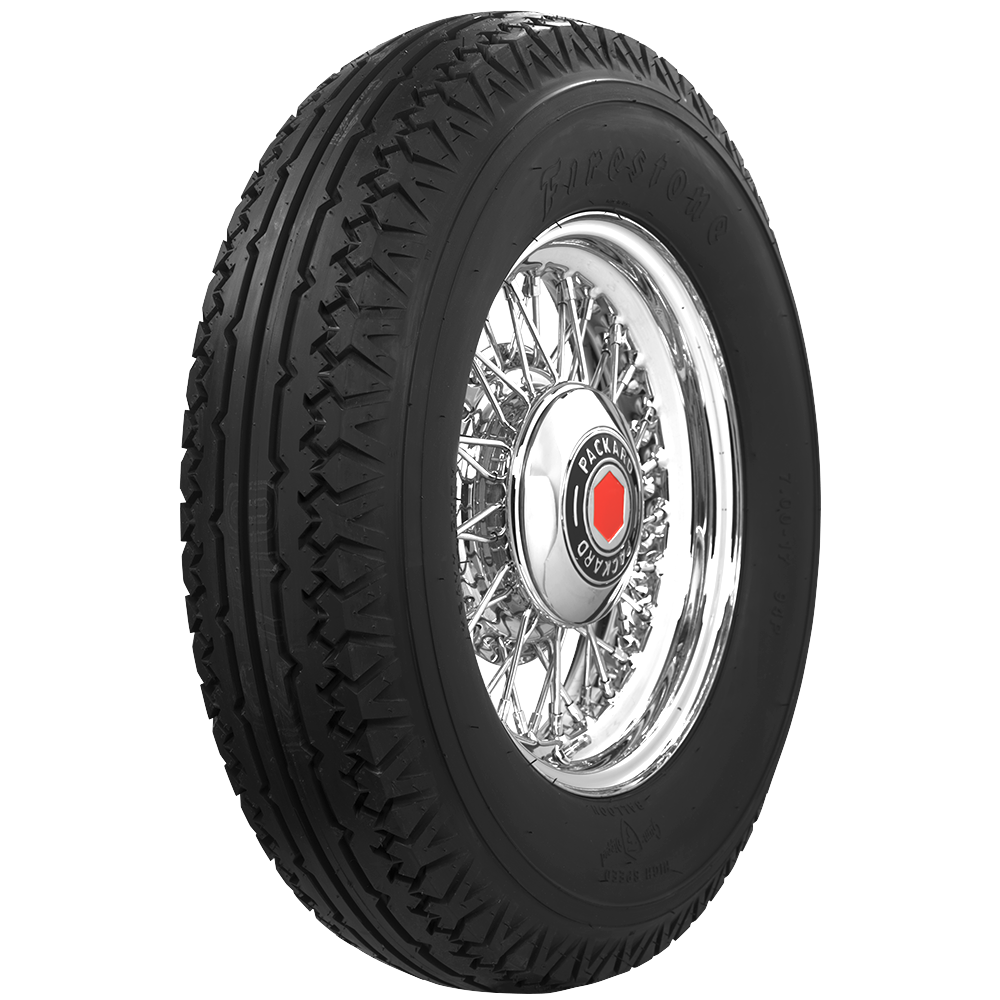 Firestone Balloon | 700-18$385.00
-
 Firestone Balloon | 700-19$421.00
-
 Firestone Balloon | 700-20$446.00
-
 Firestone Balloon | 700-21$516.00
-
 Firestone Balloon | 750-17$473.00
-
 Firestone Balloon | 750-18$422.00
-
 Firestone Balloon | 750-19$463.00


Tires With Over 120 Years Of Legacy
Firestone is the most extensive line of vintage tire designs in the world. From the legendary Firestone Dirt Track tires to the muscular Wide Oval, elegant whitewall Balloon tires and on down to the Deluxe Champion motorcycle tires.
The offering is immense, with hundreds of vintage fitments available directly from the world's leading supplier of collector tires and wheels. Thousands of builders and restorers around the world depend on Coker Tire Company for authenticity, accuracy and quality of Firestone vintage tires.
Frequently Asked Questions
Brand Identity & Legacy ▼
What role did Firestone play in early American automotive history? ▼
Firestone was a foundational supplier during the rise of the American automobile industry. The brand partnered with major manufacturers in the early 20th century, providing tires that supported the transition from horse-drawn vehicles to mass-produced cars. Their involvement helped standardize tire construction and improve durability for early road conditions.
In addition to passenger vehicles, Firestone contributed to racing and agricultural equipment, expanding its influence across multiple segments. This broad involvement positioned Firestone as more than just a tire supplier. It became part of the infrastructure that enabled automotive growth, which is why its name still carries weight among collectors and historians today.
How is Firestone recognized among vintage tire enthusiasts today? ▼
Among enthusiasts, Firestone is recognized for offering one of the most diverse selections of period-correct tire designs. From wide whitewall bias ply construction to performance-oriented muscle car tires, the brand covers multiple eras with visual and structural accuracy. This versatility makes it a go-to option for restorers working across different vehicle categories.
Enthusiasts also associate Firestone with authenticity. The brand’s designs closely replicate original sidewall profiles and tread patterns, which is critical for concours-level builds. At the same time, modern reproductions often incorporate improved materials that enhance tread stability and durability, allowing drivers to maintain vintage looks without sacrificing usability.
Why do restorers trust Firestone for period-correct builds? ▼
Restorers trust Firestone because of its consistent focus on historical accuracy. The brand reproduces original sidewall lettering, tread designs, and proportions that match factory specifications. This attention to detail ensures that vehicles retain their correct visual identity, which is especially important for judged restorations.
Beyond appearance, Firestone tires are engineered to reflect the driving characteristics of their respective eras. Bias ply construction maintains the original ride feel, while modern radial construction options provide improved contact patch stability. This balance allows restorers to choose between strict authenticity and enhanced drivability depending on the goals of the build.
What eras of vehicles are most associated with Firestone tires? ▼
Firestone tires are strongly associated with several key automotive eras, including pre-war classics, post-war American cars, and the muscle car period of the 1960s and early 1970s. Each era is represented through distinct tire styles such as balloon whitewalls, narrow whitewalls, and Wide Oval performance designs.
This wide coverage allows Firestone to remain relevant across multiple enthusiast groups. Whether working on a 1930s luxury car or a late 1960s performance coupe, builders often turn to Firestone for historically accurate solutions. The brand’s ability to span these eras reinforces its identity as a comprehensive vintage tire manufacturer.
Appearance & Styling ▼
How do Firestone whitewall tires reflect classic styling trends? ▼
Firestone whitewall tires reflect the design language of mid-century American cars, where bold sidewall contrast was a defining feature. Wide whitewalls were commonly used on luxury vehicles, creating a clean and elegant visual that emphasized wheel size and body lines.
As styling evolved, narrower whitewalls became more common, offering a subtler appearance. Firestone reproduces both styles, allowing restorers to match the correct era. The accuracy of these designs ensures that the vehicle maintains its original aesthetic balance.
What is the visual appeal of Firestone Wide Oval tires? ▼
Firestone Wide Oval tires are closely associated with the muscle car era, offering a more aggressive and performance-oriented appearance. Their wider tread profile and bold sidewall lettering contribute to a planted, sporty stance that complements high-performance vehicles.
The design also visually suggests improved contact patch and traction, even before considering actual performance. This combination of form and function made Wide Oval tires a defining feature of late 1960s automotive styling, and they remain a popular choice for muscle car enthusiasts today.
Are Firestone tires suitable for concours-level appearance? ▼
Firestone tires are widely used in concours-level restorations due to their attention to detail. The brand carefully reproduces original sidewall markings, tread patterns, and overall proportions, which are critical for judged events where authenticity is closely evaluated.
These visual elements go beyond aesthetics. They represent historical accuracy and demonstrate that the vehicle has been restored with respect to its original specifications. For this reason, Firestone remains a trusted choice among collectors aiming for top-tier presentation standards.
How does Firestone balance vintage appearance with modern expectations? ▼
Firestone balances vintage appearance with modern expectations by preserving original design elements while improving internal construction. The external look remains faithful to historical specifications, ensuring visual authenticity.
Internally, modern materials enhance tread stability and heat dissipation. This allows the tires to perform more reliably under current driving conditions. The result is a tire that looks period correct but delivers improved ride comfort and durability compared to original versions.
Driving Experience, Performance & Construction ▼
What is the difference between Firestone radial and bias ply tires? ▼
Bias ply construction uses layered cords that create a flexible sidewall and a rounded contact patch. This design reflects original tire technology and delivers a traditional ride feel, though it can reduce high-speed stability.
Radial construction separates the sidewall and tread functions, allowing for a flatter contact patch and improved traction. Firestone offers both types, giving enthusiasts the ability to select either historical accuracy or enhanced performance depending on their build goals.
How do Firestone tires handle compared to modern tires? ▼
Compared to modern performance tires, Firestone vintage designs prioritize period-correct behavior over maximum grip. Bias ply tires typically have less precise handling due to their flexible construction and smaller contact patch.
Radial Firestone tires narrow this gap by offering improved stability and better tread control. While they may not match the performance of contemporary high-performance tires, they provide a balanced driving experience that suits classic vehicles and their suspension systems.
What role does tread design play in Firestone tire performance? ▼
Tread design influences traction, water evacuation, and overall stability. Firestone reproduces original tread patterns that were engineered for the driving conditions of their time, which often focused on durability and predictable handling.
Modern reproductions benefit from updated materials that enhance tread longevity and heat dissipation. This allows the tires to perform more consistently under modern driving conditions while maintaining their original visual identity.
What driving conditions are Firestone tires best suited for? ▼
Firestone tires are best suited for moderate driving conditions that align with classic vehicle use. This includes cruising, weekend driving, and show participation. Their design prioritizes stability and comfort over extreme performance.
Radial options expand usability by offering better traction and handling in varied conditions. However, these tires are still intended for classic vehicles and should be used within the limits of their design to ensure optimal performance and longevity.
Vehicle Applications ▼
What types of vehicles commonly use Firestone tires? ▼
Firestone tires are commonly used on a wide range of vintage vehicles, including pre-war classics, post-war sedans, and muscle cars. Their extensive design range allows them to match the styling and performance needs of different eras.
This versatility makes them a popular choice among restorers working on diverse projects. Whether the goal is authenticity or improved drivability, Firestone provides options that align with the vehicle’s original design intent.
Are Firestone tires suitable for classic American muscle cars? ▼
Firestone tires are well suited for classic American muscle cars, particularly designs like the Wide Oval. These tires complement the aggressive styling and performance identity of vehicles from the late 1960s and early 1970s.
Radial versions improve handling characteristics and tread stability, making them a practical option for drivers who want better road manners. This combination of style and function makes Firestone a strong choice for muscle car builds.
Are Firestone tires used in hot rod and street rod builds? ▼
Firestone tires are commonly used in hot rod and street rod builds, especially when builders want a traditional appearance. Designs like wide whitewalls or blackwall bias ply tires help achieve a classic hot rod look.
For street rods, radial options provide improved handling and ride comfort. This allows builders to combine vintage styling with modern driving expectations, making Firestone a versatile option in this segment.
Are Firestone tires appropriate for European classic cars? ▼
Firestone offers radial designs that can suit certain European classic cars, particularly those requiring a more refined driving experience. These tires provide improved ride comfort and stability compared to traditional bias ply options.
While not always the original equipment choice for European vehicles, Firestone can be a practical option for owners seeking reliable performance with a vintage look. The key is selecting a design that aligns with the vehicle’s styling and handling characteristics.
Maintenance & Ownership ▼
What maintenance is required for Firestone bias ply tires? ▼
Bias ply tires require regular monitoring of inflation and alignment. Their flexible sidewall profile makes them more prone to irregular wear if not properly maintained.
Rotating the tires and checking for consistent wear patterns can help extend their lifespan. Proper care ensures that the tires maintain their intended ride characteristics and visual appearance over time.
Are Firestone tires suitable for regular driving use? ▼
Firestone tires can be suitable for regular driving, particularly radial designs that offer improved stability and ride comfort. These tires are better equipped to handle modern road conditions.
Bias ply tires can also be used regularly, but they are best suited for moderate driving. Understanding the intended use of each construction type helps ensure a positive ownership experience.