
M & H Racemaster

Filter By
M & H Racemaster Drag Tires
Perhaps no other tire brand name is more famous at the drag strip than M&H Racemaster. Coker Tire Company offers several performance and race tires including the legendary M&H drag tire line. M&H Racemaster tires are available in vintage drag slicks, drag radials, camber tires, front runner, motorcycle drag slicks and more. From muscle car drag racing tires to all-out slicks, M&H Racemaster is a proven winner at the strip and a trusted name in race tires.
-
 M&H Radial Drag Rear | 275/40R17$447.00
-
 M&H Radial Drag Rear | 275/45R18$585.00
-
 M&H Radial Drag Rear | 275/50R15$431.00
-
 M&H Radial Drag Rear | 275/50R17$498.00
-
 M&H Radial Drag Rear | 275/55R16$472.00
-
 M&H Radial Drag Rear | 275/60R15$436.00
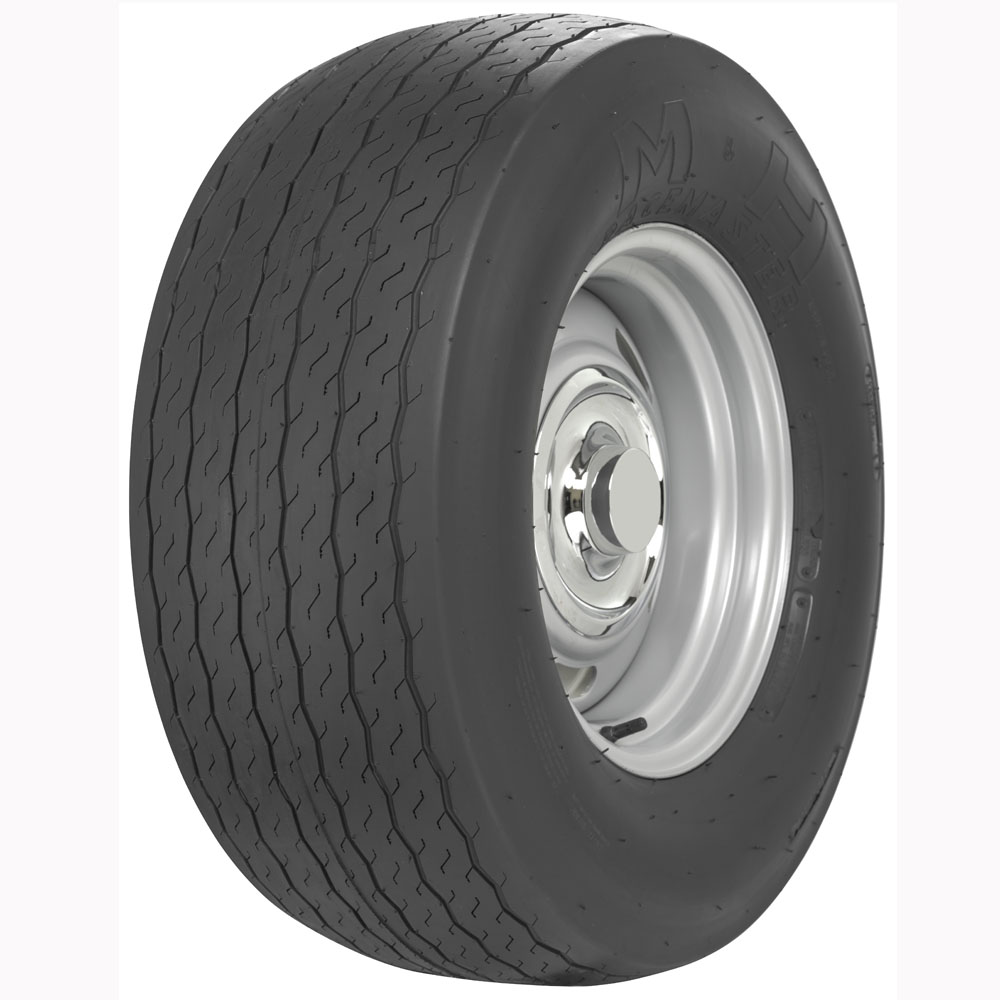
Drag Slicks
The M&H Racemaster tire brand has deep roots in the drag racing world, and Coker Tire is your source for the longstanding tire brand. Despite its history, M&H also develops a number of modern drag racing tires, from DOT approved drag radials to 17 " front runner tires for use on modern muscle cars with big brakes.
Coker Tire also offers M&H vintage drag slicks in several sizes to fit Nostalgia Super Stock cars, Nostalgia Funny Cars, Nostalgia Top Fuel Dragsters, gassers, hot rods and much more. Among the immense M&H Racemaster product line are drag slicks and drag radials to fit sport compact cars, modern sports cars and more, so Racemaster tires reach a wide variety of applications, in addition to its faithful customers with a nostalgia drag car in their garage.
Frequently Asked Questions
Brand Identity & Legacy ▼
Why is M&H Racemaster so well known in drag racing culture? ▼
M&H Racemaster tires have a long-standing reputation rooted directly in American drag racing history. The brand became widely recognized during the rise of organized drag racing in the mid twentieth century, when consistent traction and predictable launches became critical to performance. Racemaster tires quickly earned trust among racers for their ability to deliver reliable grip under extreme acceleration conditions.
Over time, M&H Racemaster became synonymous with strip performance, particularly in classes where traction determines race outcomes. Enthusiasts often associate the brand with authenticity in period-correct drag builds, from early muscle car racers to nostalgia classes. That heritage continues today, making M&H a respected name among both vintage racers and modern performance builders.
What does the M&H Racemaster brand represent today? ▼
Today, M&H Racemaster represents a focused commitment to drag racing performance rather than general street tire versatility. The brand continues to prioritize traction, controlled deformation, and consistent contact patch behavior under high torque loads. This specialized approach sets it apart from more general purpose classic tire brands.
At the same time, M&H has evolved to support both vintage and modern racing applications. Its lineup includes traditional bias ply construction for nostalgia builds alongside radial construction options for improved stability and heat dissipation. This dual approach allows the brand to remain relevant across generations of racers while preserving its core identity as a strip-focused performance tire manufacturer.
How is M&H Racemaster viewed among classic car community? ▼
Among classic car enthusiasts, M&H Racemaster tires are viewed as purpose-built tools for performance rather than purely aesthetic components. They carry strong credibility in the drag racing community, especially among those building cars intended for actual track use rather than static display.
Enthusiasts restoring or recreating period drag cars often choose M&H because of its historical accuracy and proven performance characteristics. The brand is particularly respected in nostalgia racing circles, where authenticity and function go hand in hand. This reputation makes M&H a go-to option for builders who prioritize traction and period-correct racing identity over everyday drivability.
Is M&H Racemaster considered a heritage or modern performance brand? ▼
M&H Racemaster occupies a unique position as both a heritage and modern performance brand. Its origins are deeply tied to early drag racing, which gives it strong historical credibility among enthusiasts focused on authenticity and period correctness.
At the same time, the brand has continued to develop newer technologies, including radial construction designs that improve tread stability and heat management. This combination allows M&H to serve a wide range of users, from nostalgia racers seeking bias ply behavior to modern builders who want improved consistency and durability. The result is a brand that bridges traditional drag racing roots with contemporary performance expectations.
Why do nostalgia drag racers continue to choose M&H Racemaster tires? ▼
Nostalgia drag racers choose M&H Racemaster tires because the brand closely aligns with the look and performance characteristics of original period race setups. Bias ply construction, flexible sidewall profiles, and traditional slick designs replicate the behavior of early drag racing tires, which is essential for maintaining authenticity.
In addition to visual correctness, these tires deliver the traction characteristics expected from vintage racing setups. The controlled sidewall deformation helps maximize the contact patch during launch, which is critical for straight line acceleration. This combination of authenticity and functional performance keeps M&H relevant in classes that value historical accuracy as much as competitive capability.
Appearance & Styling ▼
What makes M&H Racemaster tires visually unique? ▼
M&H Racemaster tires are visually defined by their purpose-built, competition-oriented appearance. Unlike traditional street tires, many M&H designs feature minimal tread patterns or full slick surfaces, emphasizing maximum rubber contact with the track. This creates a clean, aggressive look that immediately signals performance intent.
The sidewall profile is typically tall and flexible on bias ply designs, contributing to the classic drag racing stance. Front runner tires further enhance this look with narrow widths and reduced rolling resistance. Together, these elements create a recognizable visual identity that aligns closely with vintage and modern drag racing aesthetics.
How do M&H Racemaster tires contribute to a classic drag racing look? ▼
M&H Racemaster tires play a major role in achieving the classic drag racing stance seen in period-correct builds. The combination of wide rear slicks and narrow front runner tires creates the signature nose-high, rear-biased appearance associated with vintage strip cars.
This visual setup is not purely cosmetic. The large rear contact patch supports traction, while the smaller front tires reduce weight and rolling resistance. Enthusiasts restoring gassers, Super Stock cars, or early funny cars rely on M&H to replicate this iconic look accurately while maintaining the functional characteristics that define drag racing vehicles.
Are M&H Racemaster tires designed more for function or appearance? ▼
M&H Racemaster tires are fundamentally designed for function, with appearance following performance requirements. Every aspect of the tire, from tread design to sidewall profile, is engineered to maximize traction and stability during straight line acceleration.
That said, the functional design naturally produces a distinctive appearance that has become iconic in drag racing culture. Enthusiasts often value this look because it reflects genuine performance capability rather than purely decorative styling. As a result, M&H tires are appreciated for delivering both authentic visual impact and race-proven engineering.
What sidewall styles are commonly associated with M&H Racemaster tires? ▼
M&H Racemaster tires are typically associated with clean, understated sidewall styles that prioritize performance clarity over decorative elements. Most designs feature blackwall sidewalls without raised lettering or whitewall accents, reinforcing their competition-focused identity.
This minimal approach reduces distractions and aligns with the brand’s racing heritage. The sidewall profile itself is often more flexible on bias ply tires, which contributes to traction by allowing controlled deformation under load. For enthusiasts, this combination of simplicity and functional design reinforces the tire’s role as a serious performance component.
Driving Experience, Performance & Construction ▼
What is the difference between M&H bias ply and radial drag tires? ▼
The key difference lies in how the tire manages load and maintains its contact patch. Bias ply M&H Racemaster tires feature overlapping ply construction, which creates a more flexible sidewall. This flexibility helps the tire wrinkle slightly during launch, improving traction in lower speed, high torque situations.
Radial drag tires use perpendicular ply construction, resulting in a stiffer sidewall and more stable tread surface. This improves high speed stability, heat dissipation, and consistency over multiple passes. Racers often choose between the two based on vehicle setup, track conditions, and desired handling characteristics during acceleration.
Are M&H Racemaster tires suitable for street driving? ▼
Some M&H Racemaster tires, particularly DOT certified drag radials, can be used for limited street driving. These designs incorporate features that allow for basic road use while still prioritizing traction during acceleration.
However, many M&H tires, including full slicks and certain bias ply designs, are intended strictly for track use. They lack tread patterns for water evacuation and may wear quickly under normal driving conditions. Enthusiasts typically reserve these tires for racing environments to ensure optimal performance and safety.
How does M&H Racemaster optimize traction at the drag strip? ▼
M&H Racemaster tires optimize traction by maximizing the effective contact patch and using specialized rubber compounds designed for grip. The tire construction allows for controlled deformation, which increases surface area during launch and improves adhesion to the track.
Additionally, the tread design, or lack of it in slicks, ensures that more rubber remains in contact with the surface. Radial versions further enhance traction consistency by maintaining a stable tread profile under load. These combined factors help deliver the strong, repeatable launches that racers depend on.
What kind of handling should you expect from M&H Racemaster tires? ▼
Handling characteristics of M&H Racemaster tires are optimized for straight line performance rather than cornering. The focus is on stability during acceleration and maintaining a consistent contact patch under load.
Bias ply designs may feel less stable during lateral movement due to their flexible sidewalls, while radial versions provide improved directional control. For vehicles primarily used at the drag strip, this trade-off is acceptable, as cornering performance is not a primary concern. Understanding this helps set realistic expectations for how these tires behave outside of racing conditions.
What makes M&H Racemaster tires reliable for competitive racing? ▼
M&H Racemaster tires are considered reliable due to their consistent traction characteristics and predictable behavior under load. Racers rely on the ability to achieve similar launch performance across multiple runs, and M&H designs are built with that consistency in mind.
The combination of durable construction, specialized compounds, and controlled sidewall behavior contributes to dependable performance. Whether using bias ply or radial construction, the tires are engineered to maintain their contact patch and deliver stable results. This reliability is a key reason why M&H remains a trusted choice in competitive drag racing.
Vehicle Applications ▼
What types of vehicles commonly use M&H Racemaster tires? ▼
M&H Racemaster tires are most commonly used on vehicles built for drag racing applications. This includes classic muscle cars, dedicated drag cars, and modern performance vehicles that require strong straight line traction. Their design is specifically tailored to maximize acceleration rather than all-around driving performance.
In addition to full race builds, M&H tires are also used on nostalgia cars such as gassers and vintage dragsters. Some modern street and strip builds also incorporate M&H drag radials for improved launch performance. This wide range of applications reflects the brand’s versatility within the drag racing community
Are M&H Racemaster tires popular for muscle car builds? ▼
Yes, M&H Racemaster tires are widely used in muscle car builds, particularly those focused on drag racing performance. Classic American V8 cars often produce significant torque, which makes traction a critical factor in achieving effective acceleration.
Enthusiasts building period-correct drag cars frequently choose M&H bias ply slicks and front runners to replicate original setups. For more modern builds, radial drag tires provide improved stability and consistency. This flexibility allows M&H to support both traditional and contemporary muscle car applications while maintaining its performance-focused identity.
Can M&H Racemaster tires be used on modern performance cars? ▼
M&H Racemaster has expanded its offerings to support modern performance cars, particularly those used in drag racing. Radial drag tires are designed to handle higher speeds and provide improved tread stability, making them suitable for newer vehicles with advanced suspension systems.
These tires are often used in street and strip builds where traction during acceleration is a priority. While they may not replace standard street tires for everyday use, they offer a valuable solution for drivers looking to improve launch performance at the track. This makes M&H relevant across both classic and modern platforms.
Are M&H Racemaster tires used in nostalgia drag racing classes? ▼
M&H Racemaster tires are a staple in nostalgia drag racing classes, where authenticity and performance must align with historical standards. Many of these classes require or encourage the use of bias ply construction to replicate period-correct behavior.
The brand’s vintage drag slicks and front runner designs closely match the look and feel of original race tires. This makes them a natural choice for competitors seeking both compliance and competitive performance. Their continued presence in these classes reinforces M&H’s reputation as a heritage drag racing brand
Do hot rods and gassers typically run M&H Racemaster tires? ▼
Hot rods and gassers often use M&H Racemaster tires when the build is intended for drag racing or period-correct styling. These vehicles benefit from the traction provided by wide rear slicks and the reduced rolling resistance of narrow front runners.
In addition to performance benefits, M&H tires contribute significantly to the visual authenticity of these builds. The combination of bias ply construction and classic drag racing proportions helps recreate the look of early strip cars. This makes M&H a common choice among builders aiming to capture both the appearance and function of vintage drag machines.
Are M&H Racemaster tires suitable for sport compact drag builds? ▼
M&H Racemaster offers options that can be used in sport compact drag builds, particularly in radial drag tire configurations. These vehicles often require tires that can handle high power outputs while maintaining stability at speed.
Radial construction provides the necessary tread stability and heat dissipation for these applications. As a result, M&H has become a viable option beyond traditional muscle cars, extending into newer performance segments. This adaptability demonstrates the brand’s ability to support a diverse range of drag racing platforms.
Maintenance & Ownership ▼
How long do M&H Racemaster tires typically last? ▼
The lifespan of M&H Racemaster tires depends heavily on how they are used. In drag racing environments, tires are subjected to intense stress during launches, which can lead to faster wear compared to standard street tires.
Bias ply slicks and soft compound tires are designed for maximum traction rather than tread longevity, so they may require more frequent replacement. Radial drag tires generally offer improved durability and more consistent wear patterns. Proper storage and usage practices can help extend the life of these tires between racing sessions
Do M&H Racemaster tires require special maintenance? ▼
Yes, M&H Racemaster tires benefit from careful maintenance due to their specialized construction and intended use. Regular inspection of the tread surface and sidewall is important to identify signs of wear or damage, especially after track use.
Maintaining proper inflation is critical for preserving the correct contact patch and ensuring consistent performance. Additionally, storing the tires in a controlled environment helps prevent degradation of the rubber compound. These practices help maintain both safety and performance over time.
How important is tire pressure with M&H Racemaster tires? ▼
Tire pressure plays a crucial role in how M&H Racemaster tires perform, particularly in drag racing applications. Adjusting pressure directly affects the size and shape of the contact patch, which influences traction during launch.
Lower pressures are often used to increase grip by allowing more sidewall flex, especially in bias ply tires. Radial tires require more precise pressure settings to maintain tread stability. Finding the correct balance is essential for achieving consistent performance and avoiding uneven wear or reduced effectiveness.
What should owners expect in terms of tread longevity and performance balance? ▼
Owners should expect a trade-off between traction and tread longevity when using M&H Racemaster tires. The compounds and construction are optimized for grip, which naturally leads to faster wear compared to general-purpose tires.
Radial options offer a better balance between performance and durability, while bias ply slicks prioritize maximum traction. Understanding this balance allows owners to choose the right type of tire for their needs and manage expectations regarding replacement intervals. Proper maintenance and usage can help achieve consistent performance throughout the tire’s lifespan.