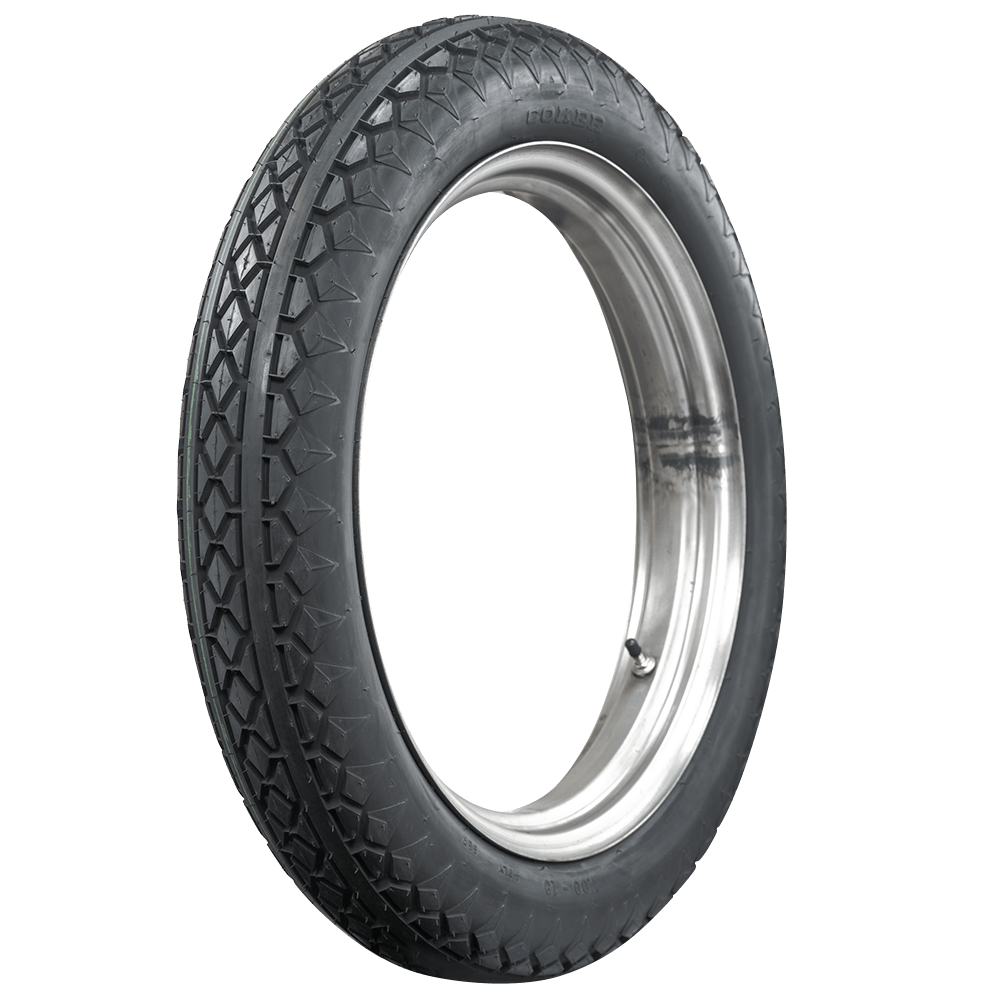
300-20 Coker Classic Bias Ply Blackwall Tire
Coker Motorcycle tires are available in may popular sizes and styles and are backed by our life of the tread warranty. White Wall Motorcycle tires are available in 5.00-16 and other very popular sizes in this product line. Tread and sidewall designs vary by size and can be viewed individually in our web store. Please note that dimensions listed tread width, section width and overall diameter are non-scientific and based on an inflated tire, mounted on a wheel. Dimensions may vary due to rim width and inflation pressure.
Blackwall Tire
Since the introduction of carbon black rocked the tire industry, the original recipe for most tires has been a solid black sidewall. For classics and collector cars alike, it's hard to beat the no-nonsense appeal of a classic blackwall style tire. British sports car, classic truck and even hot rod enthusiasts love the way a nice period correct blackwall tire looks on their vehicles.
Bias Ply Construction
Bias ply tire construction is a method that was used from the 1900's through the 1970's on passenger cars and light trucks. Bias ply tires feature ply cords that run at a 45 degree angle to the bead, and overlap in a crisscross pattern, depending on how many ply layers are used. This creates a strong tire, but bias ply tires have a tendency to follow breaks or ruts in the pavement. Bias ply tires are the most authentic choice for classic car restorations and traditional hot rod builds. Coker Tire offers a huge variety of bias ply tires for many applications.
Coker Classic Bias Ply Tires
Coker Classic bias ply tires are designed for classic cars and trucks, as well as hot rods and customs. With many popular sizes, including 670-15, 600-16 and alphanumeric sizes like L78-15, this product line fits many classic makes and models.
Coker Classic Brand Collector Vehicle Tires
Coker Tire was founded in 1958, focused on supplying the collector vehicle market with authentic tires. The Coker Classic brand is a favorite among car restorers and enthusiasts around the world. Coker was the first to develop the wide whitewall radial, and it's still one of its most popular product lines to this day. Coker Classic tires are offered in both bias ply and radial construction, using modern materials to ensure proper fitment and handling for your collector vehicle.
Please Note
- Tire mounted on wheel for demonstration purposes only. Wheel and other accessories are not included. Please note that dimensions listed (tread width, section width and overall diameter) are non-scientific and based on an inflated tire, mounted to a wheel. Dimensions may vary due to rim width and inflation pressure.
| SKU | 822823 |
|---|---|
| Weight | 8.000000 |
| Brand | Coker Classic |
| Product Size | 300-20 |
| Tube Type or Tubeless | Tube Type |
| Rim Diameter | 20 inch |
| Tire Construction | Bias Ply |
| Tire Series | Coker Classic Motorcycle |
| Sidewall Style | Blackwall |
| Motorcycle Sizes | 300-20 |
| Section Width (IN) | 2.75 |
| Rim Width (in) | 1.85 |
| Overall Diameter (IN) | 26.37 |
| Availability Date | 2025-06-30T00:00:00Z |
300-20 Coker Classic Bias Ply Blackwall Bias Ply Tire
Frequently Asked Questions
Fitment & Compatibility ▼
Will the Coker Classic Motorcycle Rear Tread | 300-20 fit my 20-inch rim? ▼
The Coker Classic Motorcycle Rear Tread | 300-20 is specifically designed for a 20-inch rim, ensuring a secure bead seat and proper alignment. Its bias ply construction allows the tire to conform slightly to the rim width of 1.85 inches listed, which is compatible with most standard motorcycle rims from the era.
Mounting this tire on an incorrect rim diameter can compromise stability, handling, and safety. Always verify rim width and diameter against the specifications listed on the product page to avoid fender clearance issues and ensure safe highway performance.
Will the Coker Classic Motorcycle Rear Tread | 300-20 provide sufficient fender and suspension clearance? ▼
With an overall diameter of 26.37 inches, this tire generally fits standard vintage motorcycle fenders and forks. The bias ply design allows some flex, which aids in clearance during compression and weight transfer.
Check your motorcycle’s rear swingarm, chainline, and fender positioning before mounting. Slightly oversized or undersized diameters can affect clearance under load, so verifying dimensions relative to your specific bike model is recommended to avoid rubbing during rides.
Will the blackwall style of the Coker Classic Motorcycle Rear Tread | 300-20 maintain authenticity? ▼
The blackwall sidewall preserves the classic aesthetic typical of early 20th-century motorcycles. It is historically accurate and blends with period-correct restoration projects.
Collectors prioritizing visual authenticity will find this sidewall complements original styling. Unlike whitewall or redline options, it is subtle and requires less maintenance while still signaling the correct era of the motorcycle.
Can I use the Coker Classic Motorcycle Rear Tread | 300-20 on modern highways safely? ▼
This tire is designed to meet DOT standards for street use. With correct inflation and moderate highway speeds, it offers stable performance on paved roads.
Bias ply construction and vintage tread design mean heat buildup may occur at sustained high speeds. Riders should monitor inflation, avoid prolonged high-speed operation, and ensure regular tire inspections to maintain optimal performance and safety.
Tire Size Equivalents & Conversions ▼
What is the metric equivalent of the Coker Classic Motorcycle Rear Tread | 300-20? ▼
The 300-20 designation roughly converts to a 75 mm section width with a 20-inch rim diameter. The overall diameter of 26.37 inches corresponds to approximately 670 mm, though exact values depend on inflation and rim width.
This conversion helps buyers comparing older alpha-numeric sizing to metric standards, ensuring proper fit on motorcycles with metric measurements or when checking cross-compatible tire charts.
How does the 26.37-inch overall diameter affect speedometer accuracy? ▼
Mounting the Coker Classic Motorcycle Rear Tread | 300-20 changes the effective rolling circumference. Speedometers calibrated for smaller or larger diameters may overstate or understate actual speed by a few percent.
To maintain accuracy, check the motorcycle manufacturer’s speedometer calibration tolerance or consider minor adjustments. This is particularly relevant for long-distance riders who rely on precise speed and odometer readings.
Performance & Use Case ▼
How will the Coker Classic Motorcycle Rear Tread | 300-20 perform on U.S. highways? ▼
On paved U.S. roads, the tire offers predictable grip and compliance with moderate speeds. The bias ply tread absorbs minor bumps effectively, providing a smooth ride typical of classic motorcycles.
Highway performance requires attention to inflation and heat buildup, especially during prolonged rides. The tire handles typical street conditions safely, but extreme speeds or heavy loads may amplify sidewall flex.
Will this tire maintain tracking at highway speeds? ▼
The Coker Classic Motorcycle Rear Tread | 300-20 maintains predictable tracking when properly inflated and within recommended speed ranges. Sidewall flex may increase at sustained high speeds.
Monitoring heat buildup and ensuring alignment helps prevent wandering or instability. Avoid prolonged operation at maximum load or speed ratings to sustain optimal performance.
Construction, Durability & Load Capacity ▼
How durable is the bias ply construction over long rides? ▼
Bias ply tires flex more than radials, distributing stress along the carcass. This reduces localized fatigue and preserves tread integrity over long distances.
High-speed heat buildup should be monitored. Avoid exceeding inflation recommendations, as underinflation can cause excessive flex and accelerated wear.
How sensitive is the tire to inflation pressure? ▼
Proper inflation is critical for maintaining contact patch, handling, and sidewall stability. Overinflation can reduce grip; underinflation increases sidewall flex and heat generation.
Check pressures before each ride, especially on vintage motorcycles with older suspension or wheel designs, to preserve both ride quality and tire longevity.
Installation & Maintenance ▼
How often should I check tire pressure? ▼
Check the Coker Classic Motorcycle Rear Tread | 300-20 pressure before each ride or at least weekly. Bias ply tires are more sensitive to underinflation and overinflation, affecting contact patch and handling.
Consistent pressure maintains stability, sidewall integrity, and tread wear uniformity. This practice also helps reduce heat buildup during highway riding.
How do I inspect for wear and damage? ▼
Check for cracks, uneven tread wear, or sidewall deformities. Pay special attention to bead areas and tread edges.
Bias ply tires can develop fatigue over time. Regular inspection ensures safety and maintains vintage ride quality, helping detect potential issues early.
Write Your Own Review
Customers Also Bought