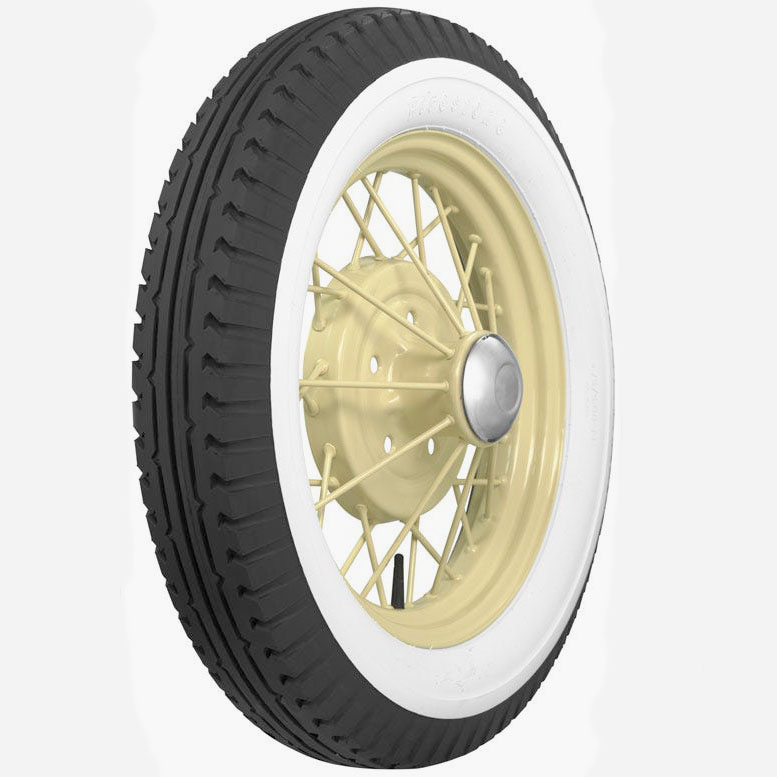
475/500-19 Firestone Classic Blackwall Tire
Vintage Firestone tires are exceptional fitments for restoration projects. These blackwall tires are expertly hand-crafted in refurbished original molds and feature authentic tread designs and sidewall markings. These classic Firestone tires feature authentic bias ply construction and are great tires for Model A Fords and similar era automobiles. Firestone Bias Ply tires are a premium tire for fine antique automobiles.
Blackwall Tire
Since the introduction of carbon black rocked the tire industry, the original recipe for most tires has been a solid black sidewall. For classics and collector cars alike, it's hard to beat the no-nonsense appeal of a classic blackwall style tire. British sports car, classic truck and even hot rod enthusiasts love the way a nice period correct blackwall tire looks on their vehicles.
Bias Ply Construction
Bias ply tire construction is a method that was used from the 1900's through the 1970's on passenger cars and light trucks. Bias ply tires feature ply cords that run at a 45 degree angle to the bead, and overlap in a crisscross pattern, depending on how many ply layers are used. This creates a strong tire, but bias ply tires have a tendency to follow breaks or ruts in the pavement. Bias ply tires are the most authentic choice for classic car restorations and traditional hot rod builds. Coker Tire offers a huge variety of bias ply tires for many applications.
Firestone Classic Bias Ply Tires
Firestone Classic bias ply tires feature dozens of sizes and styles, making it one of the most popular authentic tire options for antique and classic cars, as well as hot rods and customs. You’ll find the Deluxe Champion and other models in this iconic product line.
Firestone Tires for Collector Vehicles
The vintage line of Firestone tires fits a wide range of cars, trucks and motorcycles built from the 1900's through the 1970's. Firestone Non Skid tires, Firestone Deluxe Champion tires, Firestone Wide Oval tires and many more famous styles and sizes are available to fit military vehicles, motorcycles and classic commercial trucks. With whitewalls, redlines, raised white letters and other classic sidewall styles, this product line is one of the most extensive and popular brands for classic cars.
Please Note
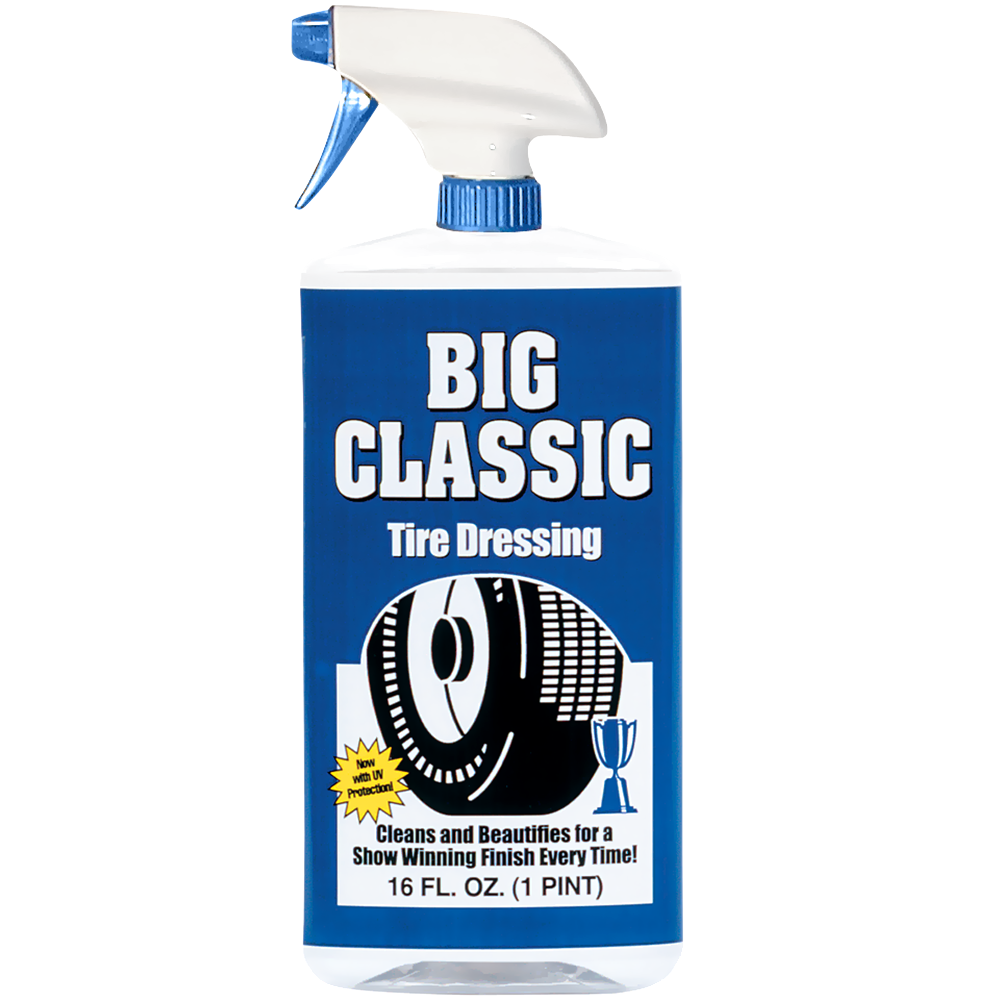
- Tire mounted on wheel for demonstration purposes only. Wheel and other accessories are not included. Please note that dimensions listed (tread width, section width and overall diameter) are non-scientific and based on an inflated tire, mounted to a wheel. Dimensions may vary due to rim width and inflation pressure. Please note Chemical Guys Tire and Rubber Cleaner and Adams Polish Tire shine has been linked to Whitewall browning and should not be used. We recommend using our line of tire care products.
| SKU | 729600 |
|---|---|
| Weight | 19.000000 |
| GTIN | 00842199103922 |
| Availability Date | 2026-11-30T00:00:00Z |
| Sidewall Style | Blackwall |
| Tire Construction | Bias Ply |
| Construction Ply | 4 PLY POLY |
| Tire Series | Firestone Classic Bias Ply |
| Rim Diameter | 19 inch |
| Tube Type or Tubeless | Tube Type |
| Product Size | 475/500-19 |
| Tread Depth (32nds) | 12 |
| Tread Width (IN) | 3.90 |
| Width Bias Ply | 4.75/5.00 |
| Brand | Firestone |
| Max Load Capacity (LBS) | 895@32 psi |
| Section Width (IN) | 5.63 |
| Rim Width (in) | 2.50 - 3.00 |
| Overall Diameter (IN) | 29.80 |
This Firestone comes in the 475/500-19 size, suitable for the classic and collector vehicles listed below.
About the 475/500-19 Tire Size
The 475/500-19 tire size is a vintage fitment used on select classic and collector vehicles, and this Firestone is offered in that bias ply size for buyers searching by application as well as by brand and size. As a bias ply tire in 475/500-19, it connects this product directly to vehicle applications commonly researched through size-based fitment categories. For more detailed information on this tire size, explore the 475/500-19 tire on Coker Tire Fitment Guide.
Frequently Asked Questions
Fitment & Compatibility ▼
Will the Firestone 475/500-19 Classic Blackwall Bias Ply fit my Model A Ford or similar era vehicle? ▼
The Firestone 475/500-19 Classic Blackwall Bias Ply is specifically described as a strong fitment for Model A Fords and similar era automobiles, so the intended application aligns well with many original 19-inch wheel setups from that period. The listed approved rim width range of 2.50 to 3.00 inches is a key checkpoint because correct wheel width supports proper bead seating and tire shape.
The 29.80-inch overall diameter and 5.63-inch section width should also be compared against original factory tire dimensions. Even small differences can affect fender gap, steering lock clearance, and ride height. Vehicles with modified brakes, altered suspension geometry, or non-original wheels should be measured before purchase rather than relying only on vehicle make and model.
How period-correct does the Firestone 475/500-19 Classic Blackwall Bias Ply look on an antique restoration? ▼
The Firestone 475/500-19 Classic Blackwall Bias Ply is built around authenticity, using refurbished original molds with vintage tread design and sidewall markings. That construction gives restorers a more accurate visual result than many modern substitutes. The blackwall sidewall also matches the straightforward appearance common on many early vehicles.
For judged restorations or owners focused on era-correct details, tread pattern, sidewall lettering, and casing proportions often matter as much as size. A modern radial may drive differently, but the visual character can change dramatically. This Firestone is best suited to owners who value historical appearance alongside functional road use.
Who should choose the Firestone 475/500-19 Classic Blackwall Bias Ply instead of a modern radial alternative? ▼
The Firestone 475/500-19 Classic Blackwall Bias Ply is best for owners prioritizing original appearance, factory-era driving character, and historically accurate restoration details. Vehicles shown at events, used for fair-weather cruising, or preserved close to stock specification are natural matches for a bias ply product like this.
Drivers seeking maximum highway stability, lower steering effort, and modern-road refinement often prefer radials when available in the correct size. The right choice depends on how the vehicle is used. Buyers focused on authenticity usually accept traditional handling traits, while frequent long-distance drivers may value modern behavior more highly.
Tire Size Equivalents & Conversions ▼
What does the Firestone 475/500-19 size mean for real-world fitment? ▼
The Firestone 475/500-19 uses an older numeric sizing format common on antique vehicles. The 19 indicates required wheel diameter, while 4.75/5.00 reflects the intended section width range in bias ply terminology. That means buyers should think in terms of period sizing standards rather than modern metric tire labels.
Because vintage sizing systems differ from modern formats, direct one-to-one conversions are not always exact. Overall diameter, width, and approved wheel width usually matter more than chasing a modern equivalent number. For this tire, the published 29.80-inch diameter and 5.63-inch section width are the most practical dimensions to compare.
What modern dimensions should I compare when replacing the Firestone 475/500-19? ▼
When comparing alternatives to the Firestone 475/500-19, focus first on the listed overall diameter of 29.80 inches and section width of 5.63 inches. Diameter influences gearing, speedometer accuracy, and ride height, while width affects clearance and steering feel. Matching those values closely usually preserves vehicle behavior better than matching names alone.
The rim requirement is equally important because the tire is intended for 19-inch wheels with 2.50 to 3.00-inch width. A tire with similar diameter but different wheel requirements may not be suitable. Always compare wheel diameter, wheel width, outside diameter, and actual mounted width together.
Can the Firestone 475/500-19 replace another 19-inch antique tire if width numbers differ slightly? ▼
A 19-inch wheel match alone is not enough. Buyers should compare overall diameter, section width, load capacity, and approved rim width when considering the Firestone 475/500-19 as a substitute for another antique tire size. Small numeric differences may be acceptable, but the whole package must remain compatible.
The Firestone carries 895 pounds at 32 psi, so axle load requirements must also be checked. Width differences can affect steering clearance, while diameter differences change stance and gearing. Slight size variation is common in vintage applications, but measurements matter more than assumptions.
Performance & Use Case ▼
How will the Firestone 475/500-19 Classic Blackwall Bias Ply drive on normal roads? ▼
The Firestone 475/500-19 Classic Blackwall Bias Ply delivers a traditional driving feel consistent with antique vehicles. Expect slower steering response and more road texture feedback than modern radials. That character is normal and often appreciated by owners who want the vehicle to feel period-correct rather than modernized.
The narrower tread and tall sidewall are better suited to relaxed cruising than aggressive cornering. Smooth inputs and moderate speeds usually provide the best experience. For owners expecting original-era behavior on weekend drives, the tire should feel appropriate and authentic rather than overly modern or artificially sharp.
Is the Firestone 475/500-19 Classic Blackwall Bias Ply a good choice for show cars and parade use? ▼
The Firestone 475/500-19 Classic Blackwall Bias Ply is an excellent candidate for show vehicles, parade cars, and occasional fair-weather use because appearance authenticity is one of its strongest advantages. Original-style molds, vintage markings, and correct proportions help complete a restoration visually.
For slower-speed use, many traditional handling compromises become less important than period correctness. Owners should still maintain pressure, inspect tubes, and avoid long-term underinflation. A vehicle that looks historically right and drives short distances comfortably is often exactly what many antique owners want.
Is the Firestone 475/500-19 Classic Blackwall Bias Ply suitable for frequent long-distance touring? ▼
The Firestone 475/500-19 can be used for touring when the vehicle is well prepared, but buyers should understand the trade-offs. Bias ply behavior, vintage steering systems, and greater sensitivity to road grooves can make long highway days more demanding than with radial-equipped classics.
Frequent stops for inspection, pressure checks, and temperature awareness are smart habits on longer trips. Proper loading also matters because each tire is rated at 895 pounds at 32 psi. Touring is possible, but expectations should match antique-era equipment rather than modern grand-touring standards.
Who is the ideal owner for the Firestone 475/500-19 Classic Blackwall Bias Ply from a driving standpoint? ▼
The ideal owner values original feel, visible authenticity, and relaxed enjoyment over maximum grip or modern-road precision. Antique car enthusiasts who drive locally, attend events, and appreciate historical correctness are the strongest match for the Firestone 475/500-19.
Buyers expecting modern braking confidence, lane-change sharpness, or effortless interstate tracking may prefer a different solution when available. The tire succeeds when matched with the right expectations. For many restorations, preserving character matters more than chasing contemporary performance benchmarks.
Construction, Durability & Load Capacity ▼
How much weight can the Firestone 475/500-19 Classic Blackwall Bias Ply carry? ▼
The listed maximum load capacity is 895 pounds at 32 psi per tire. That means the vehicle’s total loaded weight should be considered across all tires, with proper safety margin and balanced axle distribution. Load rating is especially important on older cars carrying passengers, tools, or touring luggage.
Running below recommended pressure can reduce load support and increase heat buildup. Exceeding vehicle weight needs regularly can shorten service life. Buyers should compare axle weights, not only total vehicle weight, because front and rear loads are often different on antique vehicles.
How durable is the Firestone 475/500-19 Classic Blackwall Bias Ply for occasional hobby use? ▼
For seasonal cruising, events, and hobby mileage, the Firestone 475/500-19 should align well with typical antique vehicle use when stored and maintained correctly. Many collector cars age tires by time and storage conditions more than by mileage alone. Keeping the tire properly inflated, protected from prolonged sun exposure, and inspected regularly supports service life. Misalignment, dragging brakes, or poor suspension parts can shorten tire life faster than occasional use itself. Durability depends heavily on vehicle condition and maintenance habits.
Installation & Maintenance ▼
Does the Firestone 475/500-19 Classic Blackwall Bias Ply require tubes? ▼
Yes. The product page lists the Firestone 475/500-19 Classic Blackwall Bias Ply as Tube Type, so an appropriate inner tube is required. Tube-type wheels and tires depend on the tube for air retention, making correct tube size and careful installation important.
During mounting, the tube should be protected from pinching, twisting, or abrasion. Reusing old tubes is usually less desirable than installing fresh compatible components. Buyers should also inspect wheels for rust, burrs, or damage before mounting any new tube-type tire.
How often should I check pressure on the Firestone 475/500-19 Classic Blackwall Bias Ply? ▼
Monthly checks are a good baseline, with additional checks before long drives or after storage. Tube-type assemblies can lose pressure gradually over time, and antique vehicles often sit longer between uses than daily drivers. Regular checks help preserve casing shape and wear patterns.
Pressure should be measured cold with a reliable gauge. Consistency matters more than guessing by appearance because tall sidewalls can mask low pressure visually. Frequent monitoring is one of the easiest ways to protect tire performance and service life.
How should I store the Firestone 475/500-19 Classic Blackwall Bias Ply during off-season periods? ▼
Store the tire in a cool, dry location away from direct sunlight, ozone sources, and extreme temperature swings. Long exposure to sunlight or electric motors can accelerate rubber aging. Clean storage conditions are especially helpful for collector vehicles that sit for months.
If the tire remains on the vehicle, maintaining proper inflation and moving the vehicle occasionally can help reduce flat spotting tendencies. If removed, store in a stable upright position unless mounted assemblies require another method. Good storage protects appearance and usability.
Write Your Own Review
OTHER STUFF YOU MAY LIKE

Popular Add-Ons For Your Order

More Tires This Size