700-16 Lester Classic Wide Whitewall Tire
700-16 Lester 4.50" Whitewall TireCommonly used on pre-war full bodied cars including Cadillac, LaSalle, Packard, etc., Lester tires add that classic touch to any vehicleFeatures:Wide, smooth whitewall for excellent look and quiet ridePre-siped tread for superior handling characteristics Made in USA.
Genuine Wide Whitewall Tire
Typically wide whitewalls run all the way to the bead. Narrow whitewalls will stop somewhere before the bead, resulting in a narrower band of exposed white rubber. Bright white rubber is added directly to the tire sidewall during initial construction of the carcass, resulting in a truly integrated, high-quality product after vulcanization. This style was popular into the early sixties, eventually being replaced by narrow whitewalls altogether.
Bias Ply Construction
Bias ply tire construction is a method that was used from the 1900's through the 1970's on passenger cars and light trucks. Bias ply tires feature ply cords that run at a 45 degree angle to the bead, and overlap in a crisscross pattern, depending on how many ply layers are used. This creates a strong tire, but bias ply tires have a tendency to follow breaks or ruts in the pavement. Bias ply tires are the most authentic choice for classic car restorations and traditional hot rod builds. Coker Tire offers a huge variety of bias ply tires for many applications.
Lester Classic Tires
Focused on authenticity, the Lester brand offers period correct styling and fitments for many cars from the 1900's through the 1950's. Available in wide whitewall and blackwall, Lester bias ply tires are specially designed for antique cars, and continue to be a favorite among car collectors around the world.
Please Note
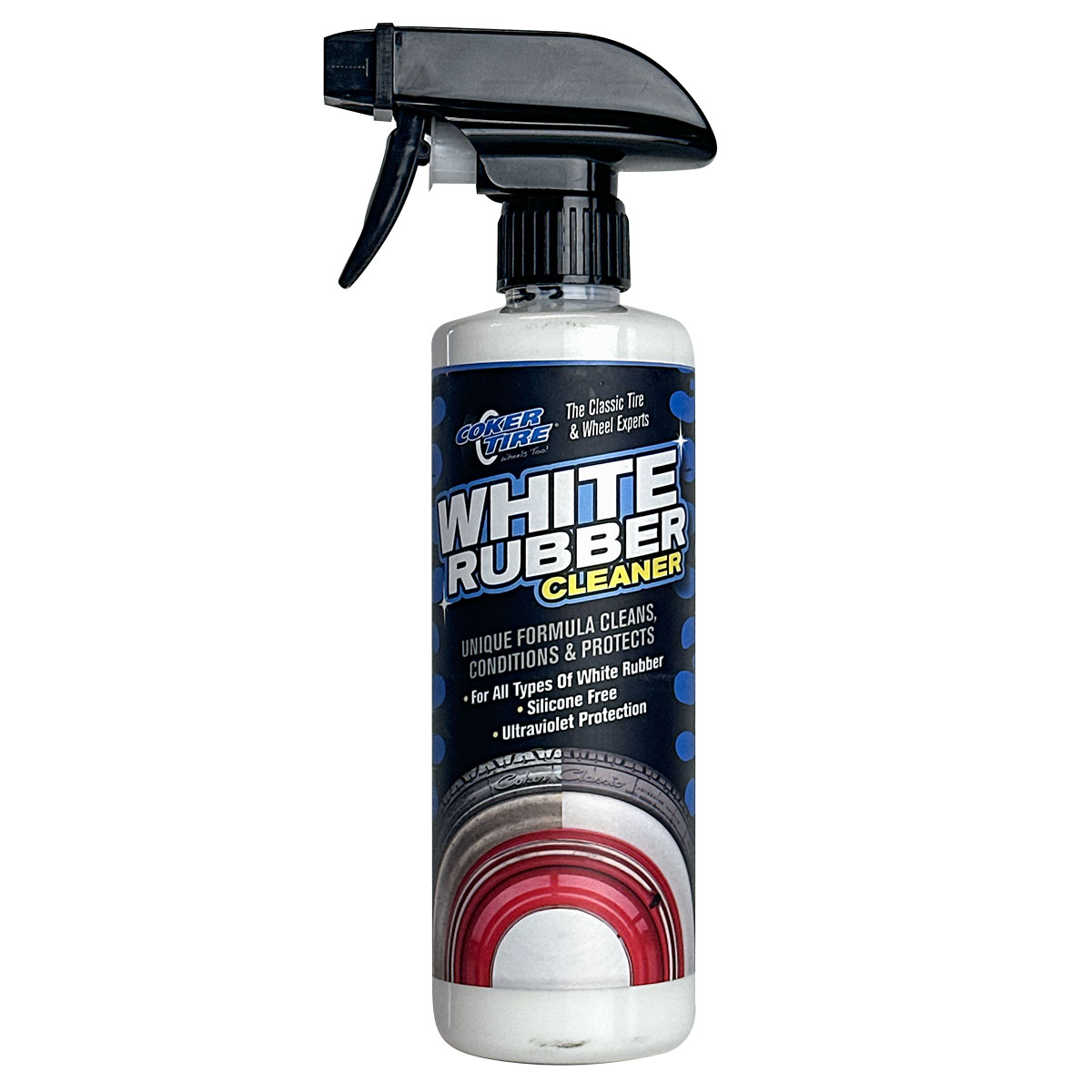
- Tire mounted on wheel for demonstration purposes only. Wheel and other accessories are not included. Please note that dimensions listed (tread width, section width and overall diameter) are non-scientific and based on an inflated tire, mounted to a wheel. Dimensions may vary due to rim width and inflation pressure. Please note Chemical Guys Tire and Rubber Cleaner and Adams Polish Tire shine has been linked to Whitewall browning and should not be used. We recommend using our line of tire care products.
| SKU | 67805 |
|---|---|
| Weight | 28.000000 |
| Availability Date | 2025-06-30T00:00:00Z |
| Sidewall Style | Wide Whitewall |
| Whitewall Width (in) | 4.500 |
| Tire Construction | Bias Ply |
| Tire Series | Lester Classic Bias Ply |
| Rim Diameter | 16 inch |
| Tube Type or Tubeless | Tube Type |
| Product Size | 700-16 |
| Width Bias Ply | 7.00 |
| Brand | Lester |
This Lester Wide Whitewall comes in the 700-16 size, suitable for the classic and collector vehicles listed below.
About the 700-16 Tire Size
The 700-16 tire size is associated with a wide span of vehicle applications from 1934 through 1979, covering prewar luxury cars, postwar sedans, specialty commercial vehicles, and later pickup and Suburban models. On this product page, Lester Wide Whitewall is offered in the 700-16 size, combining this fitment range with a wide whitewall bias ply design. For more detailed information on this tire size, explore the 700-16 tire on Coker Tire Fitment Guide.
Vehicle Fitment for the Lester Wide Whitewall | 700-16
The Lester Wide Whitewall | 700-16 is available in a tire size associated with a range of classic and collector vehicles. The vehicle applications below are organized by year, make, and model to help identify vehicles associated with the 700-16 size. Explore the linked Make & Model and Year Make & Model pages for more detailed fitment information.
Fitment information should be verified for the specific vehicle before purchase. Confirm tire size, wheel fit, load requirements, overall diameter, and available clearance.
1934–193812 makes · 45 fitments
The 1934–1938 period includes a broad range of 700-16 applications across Auburn, Buick, Cadillac, Chrysler, Graham, Hupmobile, La Salle, Lincoln, Nash, Oldsmobile, Packard, Reo, and Studebaker. These applications show the size across a diverse group of mid-1930s vehicles.
Buick
Buick applications in this period include the 50 Series and 80 Series.
Chrysler
Chrysler applications in this period include the Airflow.
Graham
Graham applications in this period include the 69 Custom and Custom.
Hupmobile
Hupmobile applications in this period include the 527 and T.
La Salle
La Salle applications in this period include the 350, 8 Cyl., and 50.
Oldsmobile
Oldsmobile applications in this period include the 8 Cyl. and L35.
Reo
Reo applications in this period include the Flying Cloud and Royale.
Studebaker
Studebaker applications in this period include the Commander and President.
Auburn
Auburn applications in this period include the 51 Series and Super Charged.
Cadillac
Cadillac applications in this period include the 60 Series.
Packard
Packard applications in this period include the 120 Series, 120CD, 138CD, 1601 Series, 1701 Series, and 8 Cyl.
Lincoln
Lincoln fitment in this period is represented by the Zephyr.
Nash
Nash fitment in this period is represented by the Ambassador.
1939–19428 makes · 21 fitments
The 1939–1942 period covers 700-16 applications for Cadillac, Chrysler, La Salle, Lincoln, Nash, Packard, Studebaker, and Buick. This range includes late-prewar and early-1940s applications tied to the same tire size.
Buick
Buick fitment in this period is represented by the 80 Series.
Cadillac
Cadillac applications in this period include the 60 Series, 61 Series, and 62 Series.
Chrysler
Chrysler fitment in this period is represented by the Imperial.
La Salle
La Salle applications in this period include the 50 and 52.
Lincoln
Lincoln fitment in this period is represented by the Zephyr.
Nash
Nash fitment in this period is represented by the Ambassador.
Packard
Packard applications in this period include the 1701 & 1702 Series, 1705 Super, Super 1703, 1801-A-120, Super, 1901 Series, 1903-6, 1904 Series, and 2004 Series.
Studebaker
Studebaker fitment in this period is represented by the President.
1946–19502 makes · 4 fitments
The 1946–1950 period includes select 700-16 applications for Austin and Packard. These listings connect the size to a smaller group of postwar vehicle applications.
Packard
Packard applications in this period include the Custom and Super.
Austin
Austin fitment in this period is represented by the A 125.
1951–19556 makes · 10 fitments
The 1951–1955 period includes 700-16 applications spanning Austin, Willys Truck, Humber, Daimler, and Willys. This range reflects a focused mix of passenger and utility vehicle associations for the size.
Austin
Austin fitment in this period is represented by the A 125.
Willys Truck
Willys Truck applications in this period include the 473 and 475.
Humber
Humber fitment in this period is represented by the Imperial.
Daimler
Daimler fitment in this period is represented by the Regency.
Willys
Willys fitment in this period is represented by the 226.
1956–19602 makes · 4 fitments
The 1956–1960 period includes a concise group of 700-16 applications for Daimler and Willys. These entries continue the size into later 1950s vehicles.
Daimler
Daimler fitment in this period is represented by the Four-Light Saloon.
Willys
Willys fitment in this period is represented by the 226.
1961–19651 make · 4 fitments
The 1961–1965 period is focused on Daimler applications associated with the 700-16 size. This grouping centers on a single make and model line across multiple model years.
Daimler
Daimler fitment in this period is represented by the 4.5 Litre.
1966–19701 make · 2 fitments
The 1966–1970 period continues 700-16 applications for Daimler. These listings are limited to the 4.5 Litre within this time span.
Daimler
Daimler fitment in this period is represented by the 4.5 Litre.
1971–19752 makes · 12 fitments
The 1971–1975 period includes a broad set of 700-16 applications for Chevrolet, Ford, GMC, and Jeep Truck, with additional Chevrolet and GMC Suburban listings beginning in 1973. This range shows the size in later truck and utility vehicle use.
Chevrolet
Chevrolet applications in this period include the C/K Pickup and Suburban.
Ford
Ford applications in this period include the F-250 and F-350.
Frequently Asked Questions
Fitment & Compatibility ▼
Will the Lester Wide Whitewall 700-16 fit my 16-inch wheels? ▼
The Lester Wide Whitewall 700-16 is intended for 16-inch wheels, but wheel diameter alone does not confirm fitment. Wheel width, bead seat condition, wheel age, and whether the wheel is safe for continued use all matter, especially on antique cars with older steel wheels.
The PDP notes that tire dimensions are based on an inflated tire mounted to a wheel and can vary by rim width and inflation pressure. Before installing the Lester Wide Whitewall 700-16, confirm that your wheel width matches the tire specifications and that the wheel is structurally sound.
Tire Size Equivalents & Conversions ▼
What modern metric size is closest to the Lester Wide Whitewall 700-16? ▼
The provided PDP content does not list a direct modern metric equivalent for the Lester Wide Whitewall 700-16. Vintage numeric sizes and modern metric sizes use different naming systems, so a rough conversion may not accurately reflect mounted height, width, stance, or vehicle clearance.
The safer method is to compare actual dimensions. Match the Lester Wide Whitewall 700-16 by overall diameter, section width, tread width, rim width range, and load rating. Those values are more reliable than choosing a modern tire based only on a conversion chart.
Can the Lester Wide Whitewall 700-16 replace another 700-16 tire? ▼
The Lester Wide Whitewall 700-16 can replace another 700-16 tire when the vehicle, wheel width, clearance, and load requirements are compatible. However, not every 700-16 tire has the same sidewall style, tread design, construction behavior, or restoration appearance.
The Lester Wide Whitewall 700-16 specifically offers a 4.50-inch wide whitewall, bias ply construction, a pre-siped tread, and classic Lester styling. If the existing tire is a blackwall, military tread, narrower whitewall, or radial alternative, expect meaningful changes in appearance, ride feel, and restoration presentation.
Performance & Use Case ▼
Is the Lester Wide Whitewall 700-16 suitable for restoration-focused driving? ▼
The Lester Wide Whitewall 700-16 is suitable for restoration-focused driving when authenticity is a priority. The PDP positions Lester as a brand focused on period-correct styling and fitments for antique cars from the 1900s through the 1950s, with this tire commonly used on pre-war full-bodied cars.
For regular driving, buyers should understand that the Lester Wide Whitewall 700-16 uses bias ply construction. It can deliver the correct look and feel for a classic restoration, but it will not provide the same tracking behavior or road isolation as a modern radial tire.
How will the Lester Wide Whitewall 700-16 affect straight-line tracking? ▼
The Lester Wide Whitewall 700-16 may follow pavement grooves, breaks, or ruts more than a modern radial because the PDP explains that bias ply tires tend to do so. This should be understood as normal period behavior rather than an automatic defect.
Straight-line tracking can be improved through correct alignment, balanced wheels, proper inflation pressure, and a sound steering system. On pre-war vehicles, worn kingpins, loose steering boxes, and aging suspension components can exaggerate tracking issues. The Lester Wide Whitewall 700-16 performs best with a mechanically sorted chassis.
How does the Lester Wide Whitewall 700-16 balance authenticity and usability? ▼
The Lester Wide Whitewall 700-16 prioritizes authenticity through bias ply construction, 700-16 sizing, Lester period styling, and a 4.50-inch wide whitewall. The PDP positions Lester tires as favorites among collectors seeking period-correct fitments for antique cars from the 1900s through the 1950s.
The usability trade-off is that the Lester Wide Whitewall 700-16 will not behave like a modern radial. Buyers should expect authentic steering feel, more sensitivity to road irregularities, and greater dependence on pressure and alignment. For traditional restorations, that period-correct behavior may be desirable.
Construction, Durability & Load Capacity ▼
Is the Lester Wide Whitewall 700-16 a genuine wide whitewall tire? ▼
The Lester Wide Whitewall 700-16 is a genuine wide whitewall tire with a 4.50-inch whitewall called out in the PDP description. The page explains that bright white rubber is added directly to the tire sidewall during initial carcass construction and integrated after vulcanization.
That construction matters for buyers who want an authentic whitewall look rather than a cosmetic overlay. The Lester Wide Whitewall 700-16 has the wide whitewall appearance associated with pre-war and early classic cars, where the white band often extends close to the bead area.
How does heat buildup affect the Lester Wide Whitewall 700-16 during driving? ▼
Heat buildup in the Lester Wide Whitewall 700-16 is influenced by inflation pressure, vehicle weight, speed, alignment, and road temperature. Underinflation can increase sidewall flex and heat, which is especially important on heavier pre-war cars using bias ply construction.
Before longer drives, check the Lester Wide Whitewall 700-16 cold pressure and inspect for visible damage, cracking, uneven wear, or rubbing. Maintain pressure consistently and avoid overloading the vehicle. Heat management is a practical ownership concern for any vintage-style tire used on real roads.
Installation & Maintenance ▼
What should I check before installing the Lester Wide Whitewall 700-16? ▼
Before installing the Lester Wide Whitewall 700-16, confirm wheel diameter, wheel width, bead condition, valve stem condition, fender clearance, suspension clearance, and vehicle load requirement. The tire is intended for 16-inch wheels, but correct installation depends on the full vehicle and wheel package.
Also compare the PDP dimensions for tread width, section width, and overall diameter with your current tire. The Lester Wide Whitewall 700-16 should be checked at ride height, under steering movement, and with normal vehicle loading so clearance is not judged only while parked.
What inflation pressure should I use with the Lester Wide Whitewall 700-16? ▼
The visible PDP content does not list a specific inflation pressure for the Lester Wide Whitewall 700-16. Inflation should be determined using the vehicle weight, tire load rating, wheel width, driving use, and applicable manufacturer guidance rather than guessing from the tire’s appearance.
Inflation pressure affects ride comfort, contact patch shape, steering effort, tread wear, and heat buildup. The Lester Wide Whitewall 700-16 should be checked cold and maintained consistently. Underinflation can increase heat and shoulder wear, while overinflation can make the ride harsher and reduce tread compliance.
How should I clean the Lester Wide Whitewall 700-16 whitewall? ▼
The Lester Wide Whitewall 700-16 should be cleaned with products that are safe for classic whitewall tires. The PDP specifically warns that Chemical Guys Tire and Rubber Cleaner and Adams Polish Tire Shine have been linked to whitewall browning and should not be used.
Because the Lester Wide Whitewall 700-16 has a genuine integrated whitewall, avoid harsh chemicals, aggressive dressings, and cleaners not intended for this application. Use Coker’s recommended tire care products and clean regularly so brake dust, road film, and grime do not build up on the whitewall.
Write Your Own Review
Popular Add-Ons For Your Order
More Tires This Size