

Filter By
American Racing Custom Wheels
American Racing was founded in 1956 by Romeo Palamides, an innovative drag racer that originally set his sights on lightweight magnesium racing wheels. Although American Racing's first focus was on the racing market, the wheels quickly bled into the hot rod world. Seeing this market explode with popularity, American Racing responded with product lines that were designed for use on the street.


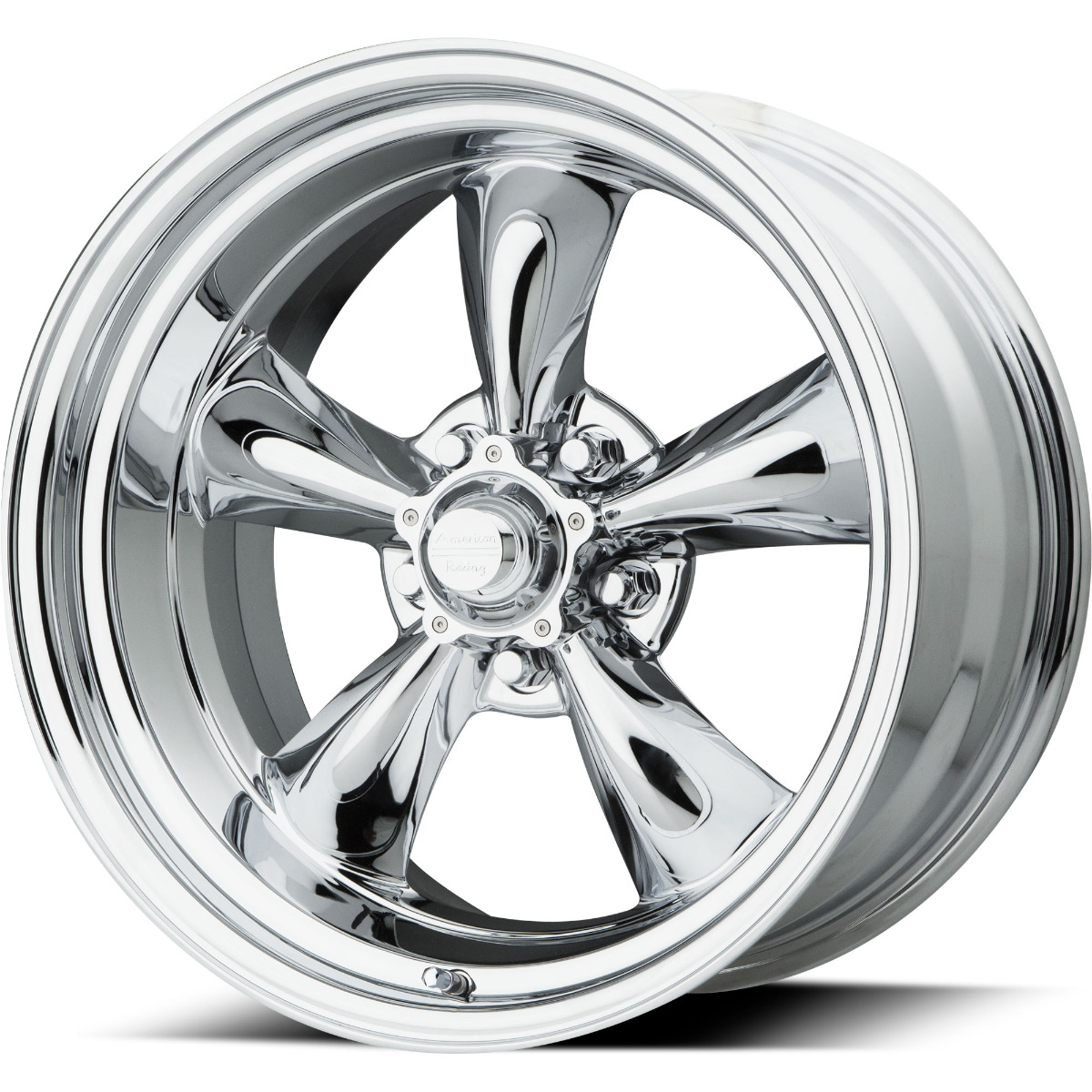
American Racing Torq-Thrust Wheels are the ULTIMATE CHOICE for Hot Rods, Muscle Cars and Classic Trucks!
Although many designs rolled out in the 1960's and 1970's, including the American Racing LeMans, 200S, T70 and others, it was the Torq-Thrust that dominated in sales and popularity. The five-spoke wheels offered fitment on many applications, and the introduction of the Torq Thrust D offered fitment on Corvettes and other cars with disc brakes. Through the years, many things have changed at American Racing, but you can still get those classic designs that put the company on the map. Although some design refinements differentiate them from the true originals, today's Torq-Thrust and Torq-Thrust D wheels are still one of the best values in the custom wheel market. American Racing wheels feature a one-piece cast aluminum construction, and utilize a conical lug nut seat, meaning you can use standard acorn style lug nuts. Coker Tire is proud to offer American Racing Torq-Thrust wheels in a variety of sizes and styles, giving you a great selection of wheels to match up with a set of our specialty tires.
Frequently Asked Questions
Appearance & Styling ▼
Why is the five-spoke design so closely tied to muscle car styling? ▼
The five-spoke layout became popular during the rise of American muscle cars because it offered a strong visual connection to performance. The evenly spaced spokes create a symmetrical and aggressive appearance that reflects the power and simplicity of the vehicles from that era.
Enthusiasts associate this design with drag racing, street performance, and factory-backed competition programs. The open spoke layout also visually exposes brakes, which reinforces the performance image. Over time, this design became a defining feature of late 1960s and early 1970s builds, making it a go-to choice for anyone aiming to capture that authentic muscle car look.
What era of automotive design do these wheels represent? ▼
Torq-Thrust wheels are most closely associated with the late 1950s through the early 1970s. This period saw a surge in aftermarket performance parts, especially in drag racing and street performance culture, where lightweight aluminum wheels became increasingly popular.
The design reflects the transition from heavy steel wheels to lighter, performance-focused alternatives. It captures the spirit of early American racing innovation and the rise of the custom car movement. Even today, the styling immediately signals that era, making it a strong visual cue for builds that aim to reflect classic American performance heritage.
Are Torq-Thrust wheels considered period-correct for restorations? ▼
Torq-Thrust wheels are widely accepted as period-correct for many builds, particularly those representing modified or dealer-upgraded vehicles from the 1960s and early 1970s. While they were not always factory-installed, they were commonly added by owners seeking improved performance and style.
In restoration circles, they are often used on cars that reflect real-world enthusiast modifications from the era. For concours-level restorations, factory wheels may still be required, but for day-two builds or period-custom projects, Torq-Thrust wheels are one of the most historically accurate aftermarket choices available.
Measurements & Compatibility Basics ▼
What wheel measurements should I understand before choosing this style? ▼
When evaluating Torq-Thrust style wheels, the key measurements to understand are diameter, width, bolt pattern, and backspacing. Diameter affects tire selection and overall ride height, while width influences how much tire can be supported and how the vehicle sits.
Bolt pattern ensures the wheel physically mounts to the hub, and backspacing determines how the wheel sits inward or outward relative to the suspension. These measurements work together, so understanding how they interact is critical. Even though the design is classic, proper sizing ensures the wheel performs correctly and maintains the intended stance and clearance.
What is backspacing and why does it matter? ▼
Backspacing measures the distance from the wheel mounting surface to the inner edge of the wheel. It determines how far the wheel sits inward toward the suspension or outward toward the fender.
Proper backspacing is critical for avoiding clearance issues with suspension components, brakes, and bodywork. Too much inward placement can cause interference, while too little can push the wheel outward and affect handling. Understanding backspacing helps achieve the right balance between appearance and functional clearance.
Are these wheels compatible with modern brake systems? ▼
Many Torq-Thrust style wheels are designed with modern brake compatibility in mind, especially versions developed after the widespread adoption of disc brakes. The open spoke design often provides more clearance than traditional steel wheels.
However, compatibility still depends on overall wheel dimensions and internal design. Enthusiasts upgrading to modern braking systems should consider how wheel diameter and spoke clearance interact with larger brake components. While the design is classic, many versions have evolved to meet modern performance expectations.
Do I need to consider lug nut style with these wheels? ▼
Yes, lug nut style is an important detail. Many Torq-Thrust wheels use a conical seat design, which requires standard acorn-style lug nuts. This seating style helps center the wheel properly on the hub and ensures even clamping force.
Using the correct lug nut type is essential for both safety and proper installation. Incorrect hardware can lead to improper seating, vibration, or damage to the wheel. Even though it may seem like a small detail, matching the lug nut style to the wheel design is a key part of a reliable setup.
Vehicle Applications & Usage ▼
What types of vehicles commonly use Torq-Thrust wheels? ▼
Torq-Thrust wheels are most commonly found on American muscle cars, hot rods, and classic trucks. Their design aligns closely with performance-oriented builds, making them a natural fit for vehicles from the 1960s and 1970s.
They are also widely used on restomod projects, where builders want to maintain a classic appearance while upgrading performance. The versatility of the design allows it to work across a wide range of platforms, from lightweight street rods to heavier full-size muscle cars and vintage pickups.
Are these wheels a good fit for classic trucks? ▼
Yes, Torq-Thrust wheels are a popular choice for classic trucks, especially those from the 1950s through the 1980s. The strong, simple spoke design complements the rugged lines of older pickups while adding a performance-inspired look.
Truck enthusiasts often choose this style to bridge the gap between utility and customization. The wheels provide a cleaner and more aggressive appearance compared to factory steel wheels, while still maintaining a period-appropriate feel that works well for both restored and modified trucks.
Are these wheels suitable for everyday driving? ▼
These wheels are well-suited for regular street use when properly matched to the vehicle. Their one-piece construction and durable finishes make them capable of handling typical driving conditions.
Enthusiasts often use them on cars that see frequent road time, including weekend cruisers and daily-driven classics. As long as proper sizing and maintenance are observed, they offer a reliable combination of style and usability for long-term ownership.
Maintenance, Performance & Longevity ▼
How durable are Torq-Thrust style wheels for long-term use? ▼
Torq-Thrust wheels are generally very durable, especially when constructed from modern cast aluminum. They are designed to handle regular street use and occasional performance driving without significant issues.
Long-term durability depends on proper care and avoiding harsh impacts. Regular inspection for damage and maintaining proper torque on lug nuts helps ensure reliability. When treated appropriately, these wheels can last for many years while retaining their structural integrity.
How should I clean and maintain these wheels? ▼
Cleaning Torq-Thrust wheels typically involves using mild soap, water, and a soft brush or cloth. This helps remove brake dust and road grime without damaging the finish.
For polished or chrome surfaces, using non-abrasive cleaners is important to preserve the shine. Regular cleaning prevents buildup that can lead to staining or corrosion. Consistent maintenance keeps the wheels looking sharp and helps extend their lifespan.
Wheel Construction & Durability ▼
What materials are used in Torq-Thrust wheels? ▼
Most Torq-Thrust wheels are made from cast aluminum, which offers a strong balance between weight and durability. Aluminum construction reduces overall mass compared to traditional steel wheels, which can improve handling and responsiveness.
The material also allows for more intricate shaping of the spokes while maintaining structural strength. This makes it ideal for producing the iconic five-spoke design while supporting everyday driving demands. Modern casting techniques further enhance consistency and reliability.
How does one-piece construction affect durability? ▼
One-piece construction means the wheel is formed as a single unit rather than assembled from multiple components. This design reduces potential weak points and improves overall structural integrity.
It also simplifies maintenance since there are no additional joints or fasteners to monitor. For street-driven vehicles, one-piece wheels provide a dependable and straightforward solution that balances strength, weight, and ease of use.