
Rallye Wheels

Filter By
Rallye Wheels
During the 1960’s American automobile manufacturers worked hard to appeal to new customers. Wild color combinations, big horsepower and cool accessories made these muscle cars and pony cars extremely popular with baby boomers, who were reaching driving age. One feature that came from the muscle car era is rallye wheels. These stylized steel wheels offered a much cooler appearance than steel wheels with hubcaps, so they became quite popular. Pontiac was one of the first to offer a Rallye wheel, but many others followed suit. Chevrolet introduced the famous Chevy Rally wheel in 1967 and it rolled beneath millions of cars.
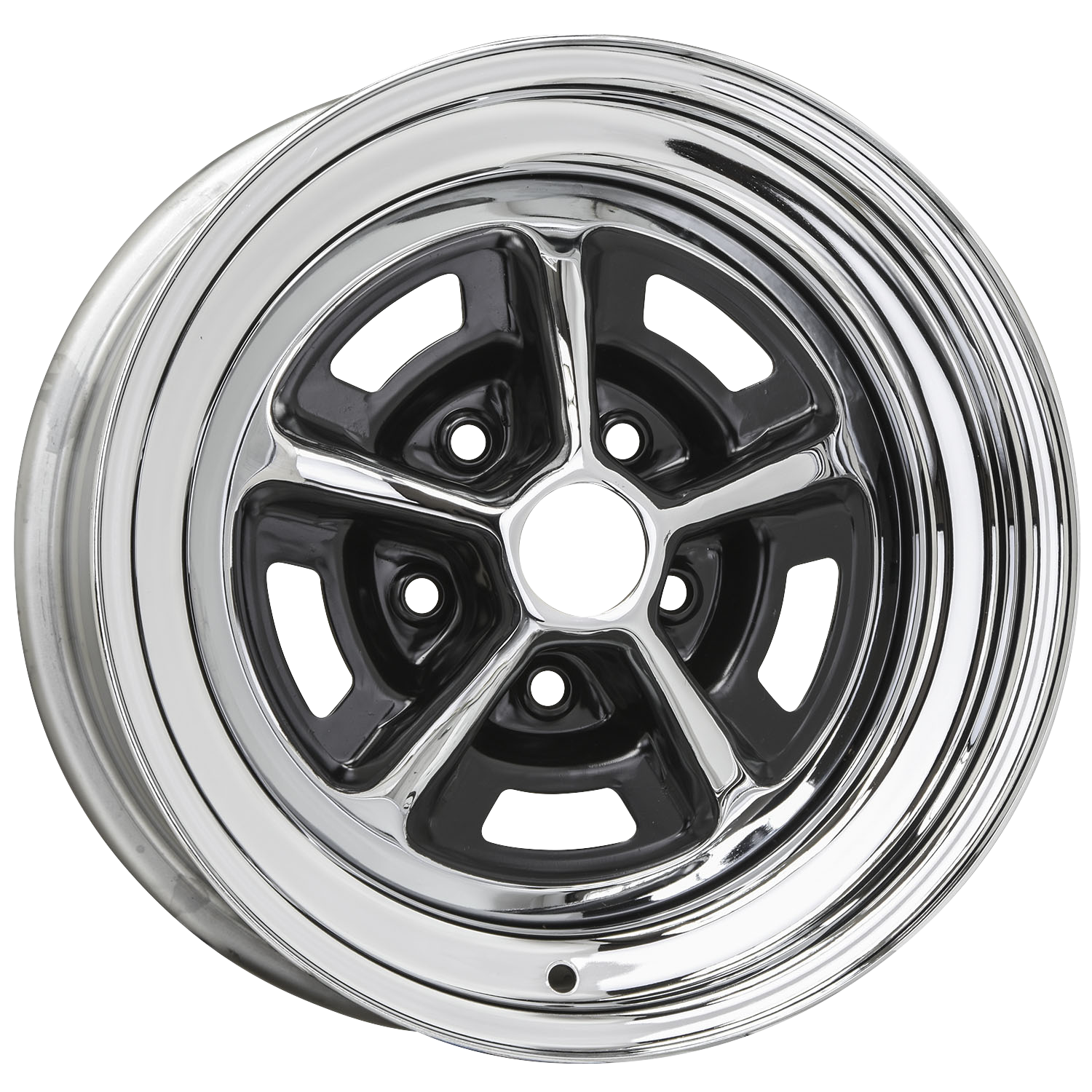

Authentic Styled Steel Rallye Wheels for Muscle Cars
Coker Tire offers authentic, American-made Rallye wheels for all sorts of applications. From OE sizing to custom diameters and widths, the Rallye wheel product lines include fitments for Chevrolet, Buick, Oldsmobile, Pontiac, Dodge, Plymouth, Ford and more! Our rally wheels are built by Specialty Wheel in City of Industry, California. Heavy gauge steel is used to form the centers and hoops, and the wheels are robotically welded. Powder coating is standard on most rallye wheels, but we do offer custom colors at an additional charge. We offer a full line of lug nuts, valve stems and special center caps and trim rings for most of our Rallye wheel designs.
Frequently Asked Questions
Appearance & Styling ▼
What makes rallye wheels visually different compared to standard steel wheels? ▼
Rallye wheels stand out visually due to their sportier, more detailed design compared to standard steel wheels. They typically feature styled slots or spoke-like cutouts, giving them a more dynamic and performance-oriented look. Rallye wheels often include decorative elements such as chrome trim rings and branded center caps, which enhance their appearance and add a touch of polish.
In contrast, standard steel wheels are usually plain, with a solid, smooth surface and minimal styling. They are often painted black or silver and frequently covered by simple hubcaps for aesthetic purposes. Overall, rallye wheels are designed to be seen and admired, while standard steel wheels prioritize function and cost-efficiency over visual appeal.
Why are rallye wheels closely associated with classic muscle cars? ▼
Rallye wheels became popular during the height of the American muscle car movement in the 1960s. Automakers began offering stylized steel wheels as optional equipment to give performance models a more aggressive look compared to standard steel wheels with full hubcaps. These wheels quickly became a signature feature on many high performance vehicles.
Because millions of muscle cars were produced with rallye wheels during this period, the design became closely tied to the identity of American performance cars. Enthusiasts now associate rallye wheels with the bold styling and horsepower wars of the era. Installing rallye wheels on a classic vehicle often helps recreate the factory performance appearance that defined many muscle cars.
Do rallye wheels look correct on different muscle car brands? ▼
Rallye wheels were produced in several variations by different American manufacturers. Brands such as Chevrolet, Pontiac, Chrysler, and others developed their own rally style wheels that shared similar design themes but included subtle differences in spoke shape, center design, and trim options. These variations allowed the wheels to match the styling of each brand.
Because rallye wheels were used across many manufacturers, they look appropriate on a wide range of classic muscle cars and pony cars. Enthusiasts often choose a design that resembles the style originally offered by the manufacturer of their vehicle. This helps maintain the authentic appearance associated with factory performance models from the muscle car era.
What role do trim rings and center caps play on rallye wheels? ▼
Trim rings and center caps are important visual elements that complete the traditional rallye wheel appearance. Trim rings cover the outer edge of the wheel and create a polished accent that contrasts with the painted center section. This combination adds depth and highlights the shape of the wheel.
Center caps cover the hub area and often include brand specific styling or logos. On many classic vehicles, these caps were designed to match the factory appearance of the wheel package. When combined with the painted steel center and polished trim ring, the result is a distinctive look that helped rallye wheels stand apart from standard steel wheels.
Are rallye wheels considered period correct for 1960s and 1970s builds? ▼
Rallye wheels are widely considered period correct for vehicles built during the 1960s and early 1970s. Many American manufacturers offered these wheels as optional equipment on performance oriented models. Because they were installed on factory muscle cars, they have become a defining visual element of that era.
Enthusiasts restoring classic muscle cars often choose rallye wheels to recreate the original factory appearance. The design reflects the styling trends of the time while maintaining the durability of stamped steel construction. For restorations that aim to capture the authentic look of the muscle car era, rallye wheels remain one of the most recognizable options.
Can rallye wheels work on modern restomod muscle cars? ▼
Rallye wheels can work well on restomod builds that blend classic styling with modern performance upgrades. Many builders prefer wheels that maintain the traditional appearance of the vehicle while updating suspension, brakes, and drivability. Rallye wheels help preserve that vintage identity.
Because modern reproductions are available in different diameters and widths, builders can often achieve the desired stance while still maintaining the classic rally style. This allows a restomod to retain its connection to the muscle car era while benefiting from contemporary engineering improvements.
Measurements & Compatibility Basics ▼
What wheel diameter options are common for rallye wheels? ▼
Rallye wheels are commonly available in diameters that reflect the sizes used during the muscle car era. Many classic vehicles originally used moderate diameter wheels paired with tall sidewall tires, which helped define the proportions of muscle cars and pony cars during the 1960s and 1970s.
Modern reproductions often expand these options slightly to give enthusiasts more flexibility when building or restoring a vehicle. The goal is usually to maintain the visual balance associated with classic muscle cars while allowing builders to tailor the stance and tire selection to their project.
What is backspacing and why does it matter for rallye wheels? ▼
Backspacing refers to the distance between the wheel mounting surface and the inner edge of the wheel rim. This measurement determines how far the wheel sits inward toward the suspension or outward toward the fender. It plays a major role in how the wheel fits within the wheel well.
For classic vehicles, proper backspacing helps ensure the wheel sits correctly without interfering with suspension components. It also affects how the wheel visually fills the fender opening. Understanding this measurement helps enthusiasts compare rallye wheels and evaluate how they may influence the stance of the vehicle.
How do rallye wheels accommodate trim rings and center caps? ▼
Rallye wheels are built with a shaped outer rim that includes a small raised lip or groove. This feature allows trim rings to snap or clip securely into place. The trim ring sits flush against the wheel, covering the plain edge and giving it a brighter, more finished appearance without needing a full hubcap.
In the center, rallye wheels have a recessed hub area with built-in clips, tabs, or threaded holes. These are used to attach center caps, which either snap in or bolt on depending on the design. The cap covers the lug nuts and hub, creating a clean, styled look. Standard steel wheels usually lack these mounting features, so they depend on full wheel covers instead.
Can rallye wheels be used with both drum and disc brake setups? ▼
Yes, rallye wheels can generally be used with both drum and disc brake setups, provided they are designed with the correct fitment. Many rallye wheels have enough داخلی clearance and proper offset to accommodate the larger calipers found in disc brake systems, while still fitting over drum brakes without issue. However, not all rallye wheels are identical, so sizing and specifications matter.
It’s important to check factors like wheel diameter, backspacing, and bolt pattern to ensure compatibility with a specific brake setup. Some older rallye wheels were originally made for drum brakes and may not clear disc brake components. In such cases, spacers or updated wheel designs may be required. Overall, with the right specifications, rallye wheels are versatile enough for both systems.
What should buyers understand before comparing rallye wheel sizes? ▼
When comparing rallye wheels, it is important to consider how diameter, width, bolt pattern, and backspacing work together. Each measurement influences how the wheel fits within the vehicle’s wheel well and how it visually complements the car’s body lines.
Enthusiasts often focus on maintaining the proportions that defined the muscle car era. The goal is to select wheels that support the desired stance while remaining visually consistent with the vehicle’s original design. Understanding these measurements helps buyers evaluate the options within the rallye wheel category.
Vehicle Applications & Usage ▼
What types of vehicles commonly use rallye wheels? ▼
Rallye wheels are most commonly associated with classic American muscle cars and pony cars from the 1960s and early 1970s. These vehicles often featured rallye wheels as optional factory equipment, giving them a sportier appearance compared to standard steel wheels with hubcaps.
The design is also used on certain classic trucks and performance oriented vehicles that share styling elements from the muscle car era. Because rallye wheels were widely used by several manufacturers, they remain a popular choice for restorations and vintage inspired builds.
Are rallye wheels popular for muscle car restorations? ▼
Rallye wheels are one of the most common choices for restoring classic muscle cars. Many vehicles originally left the factory equipped with rally style wheels, which means installing them helps recreate the authentic appearance of the period.
Restorers often choose rallye wheels because they reflect the performance focused styling that defined muscle cars. The design also works well with trim rings and center caps that replicate the original factory wheel packages.
Do classic pickup trucks use rallye wheels? ▼
Certain classic pickup trucks used rallye style wheels, particularly during the late 1960s and early 1970s. These wheels gave trucks a sportier appearance while maintaining the durability of steel construction.
Today, rallye wheels are often used on restored vintage trucks or custom builds that draw inspiration from the muscle car era. The design complements the simple body lines of many classic trucks while maintaining a factory inspired look.
Are rallye wheels suitable for hot rods and street rods? ▼
Rallye wheels can be used on hot rods and street rods, particularly when the build takes inspiration from late 1960s performance styling. While some hot rods prefer smoother or more minimalist wheels, rallye designs add a muscular appearance that works well on certain builds.
Builders often choose rallye wheels when they want a classic steel wheel look that still reflects the performance culture of the muscle car era. The result can be a balanced combination of vintage style and period correct performance aesthetics.
Were rallye wheels used across different American brands? ▼
Rallye wheels were introduced by several American manufacturers during the muscle car era. Pontiac was one of the earliest adopters, and other brands soon introduced their own versions. Chevrolet, Chrysler, and other manufacturers followed with designs that reflected their individual styling themes.
Because of this widespread adoption, rallye wheels became a common feature across many types of muscle cars and performance vehicles. The design is now recognized as a hallmark of American automotive styling from that period.
Maintenance, Performance & Longevity ▼
How should powder coated rallye wheels be cleaned and maintained? ▼
Powder coated rallye wheels are relatively easy to maintain because the finish forms a durable protective layer over the steel surface. Regular washing with mild soap and water helps remove brake dust, road grime, and other contaminants that accumulate during normal driving.
Using soft cloths or non abrasive cleaning tools helps preserve the finish and prevent scratches. Drying the wheels after washing can also help reduce water spotting. With regular care, powder coated rallye wheels can maintain their appearance for many years.
Are rallye wheels durable enough for regular driving? ▼
Rallye wheels are designed to handle normal driving conditions while maintaining the classic appearance expected from vintage style steel wheels. Modern reproductions often use improved manufacturing techniques that increase consistency and structural strength.
For enthusiasts who drive their classic vehicles regularly, rallye wheels provide a practical combination of durability and authentic styling. When properly maintained and installed, they can perform reliably for both weekend cruising and regular road use.
How well do rallye wheels hold up over long-term use? ▼
When properly cared for, rallye wheels can remain structurally sound and visually appealing for many years. The steel construction provides strength and durability that supports long term use.
The lifespan of a wheel often depends on factors such as environmental exposure, maintenance practices, and driving conditions. Regular cleaning and inspection help ensure the wheels remain in good condition throughout their service life.
Do rallye wheels require special storage considerations? ▼
Proper storage can help preserve the finish and structural integrity of rallye wheels. Keeping the wheels in a dry environment helps reduce exposure to moisture that could lead to corrosion.
Enthusiasts who store vehicles for long periods often clean the wheels thoroughly before storage. This removes road salt and contaminants that could affect the finish over time.
How often should rallye wheels be inspected for damage or wear? ▼
Regular inspection helps ensure that rallye wheels remain safe and reliable for driving. Enthusiasts typically check for visible damage such as bends, cracks, or corrosion during routine maintenance.
Inspection also provides an opportunity to confirm that lug nuts remain properly tightened and that the wheels continue to seat correctly on the hub. These simple checks support long term reliability and safe operation.
Wheel Construction & Durability ▼
What factors influence the strength of rallye wheels? ▼
The strength of a rallye wheel depends on several factors including material thickness, center design, and manufacturing precision. Heavy gauge steel provides the primary structural support, while the shape of the wheel center helps distribute forces created during driving.
Manufacturing quality also plays an important role. Accurate forming and secure joining of the wheel components ensure the wheel maintains its structural integrity. These factors work together to produce a wheel that can handle the demands of regular road use.
Are steel rallye wheels vulnerable to rust if the finish is damaged? ▼
Steel wheels can develop rust if the protective finish is damaged or if the wheel is exposed to moisture for extended periods. Powder coated finishes help protect the steel surface and reduce the risk of corrosion.
Regular maintenance and proper storage also play an important role in preventing rust. Keeping the wheels clean and addressing any finish damage early can help preserve both the appearance and structural integrity of the wheel.
What maintenance practices help extend the life of rallye wheels? ▼
Routine cleaning and regular inspection are the most important practices for maintaining rallye wheels. Removing road debris and brake dust helps preserve the finish and prevent corrosion from developing.
It is also helpful to periodically check for any signs of damage or unusual wear. Ensuring the wheels remain properly mounted and balanced helps support long term durability and reliable performance.