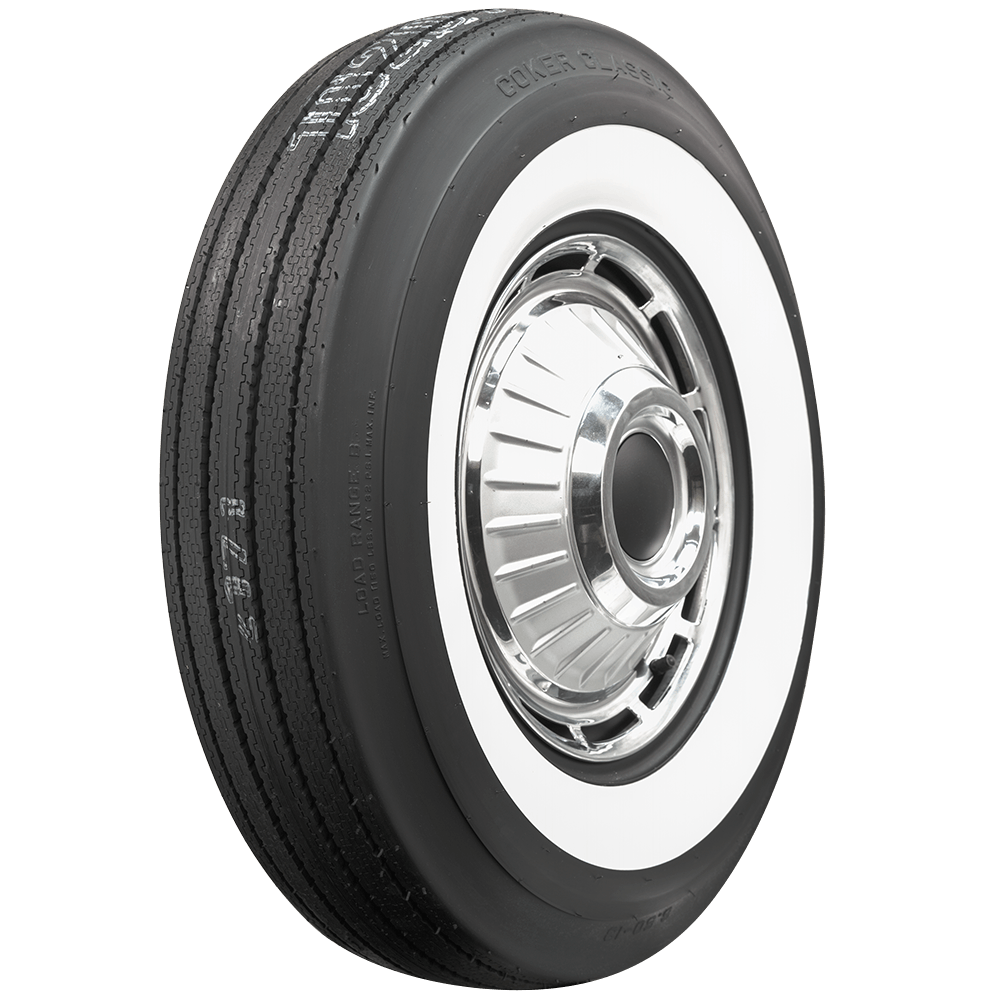
650-13 US Royal Bias Ply Wide Whitewall Tire
6.50-13 US Royal 1.875 Inch Whitewall Tire
Genuine Wide Whitewall Tire
Typically wide whitewalls run all the way to the bead. Narrow whitewalls will stop somewhere before the bead, resulting in a narrower band of exposed white rubber. Bright white rubber is added directly to the tire sidewall during initial construction of the carcass, resulting in a truly integrated, high-quality product after vulcanization. This style was popular into the early sixties, eventually being replaced by narrow whitewalls altogether.
Bias Ply Construction
Bias ply tire construction is a method that was used from the 1900's through the 1970's on passenger cars and light trucks. Bias ply tires feature ply cords that run at a 45 degree angle to the bead, and overlap in a crisscross pattern, depending on how many ply layers are used. This creates a strong tire, but bias ply tires have a tendency to follow breaks or ruts in the pavement. Bias ply tires are the most authentic choice for classic car restorations and traditional hot rod builds. Coker Tire offers a huge variety of bias ply tires for many applications.
US Royal Vintage Tires
Explore our extensive range of premium redline and white wall tires, including the iconic US Royal Tires. Whether you're restoring a classic or upgrading your survivor, our US Royal Tire selection has something for every enthusiast. At Coker Tire Company, we take pride in offering a diverse range of original fitment tire options, including US Royal brand classic tires and the highly sought-after OE Tire sizes. US Royal offers popular sizes for automotive enthusiasts, featuring period-correct authenticity restorers want. Whether you're searching for a 5.60-15 or any other US Royal Tire size, Coker Tire Company has you covered. Transform your driving experience with the unmatched quality and style of authentic US Royal Tire Collection at Coker Tire Company.
Please Note
- Tire mounted on wheel for demonstration purposes only. Wheel and other accessories are not included. Please note that dimensions listed (tread width, section width and overall diameter) are non-scientific and based on an inflated tire, mounted to a wheel. Dimensions may vary due to rim width and inflation pressure. Please note Chemical Guys Tire and Rubber Cleaner and Adams Polish Tire shine has been linked to Whitewall browning and should not be used. We recommend using our line of tire care products.
| SKU | 51040 |
|---|---|
| Weight | 18.000000 |
| GTIN | 00842199101416 |
| Availability Date | 2026-10-30T00:00:00Z |
| Sidewall Style | Wide Whitewall |
| Whitewall Width (in) | 1.875 |
| Tire Construction | Bias Ply |
| Construction Ply | 4 PLY POLY |
| Tire Series | US Royal Classic Bias Ply |
| Rim Diameter | 13 inch |
| Tube Type or Tubeless | Tubeless |
| Product Size | 650-13 |
| Tread Depth (32nds) | 12 |
| Tread Width (IN) | 4.10 |
| Width Bias Ply | 6.50 |
| Brand | US Royal |
| Max Load Capacity (LBS) | 1150@32 psi |
| Section Width (IN) | 6.60 |
| Rim Width (in) | 4.50 - 5.00 |
| Overall Diameter (IN) | 24.58 |
This US Royal 1.875 Inch Whitewall comes in the 650-13 size, suitable for the classic and collector vehicles listed below.
About the 650-13 Tire Size
The 650-13 tire size is associated with a wide range of compact and small-displacement vehicle applications from 1957 through 1969, including select Ford, Chevrolet, Plymouth, Dodge, Buick, Mercury, Oldsmobile, Toyota, Amphicar, Austin, Singer, Triumph, and Vauxhall models. This size connects directly to the US Royal 1.875 Inch Whitewall | 650-13, a bias ply tire with a 1.875 inch whitewall appearance for period-correct visual fitment on vehicles associated with this size. For more detailed information on this tire size, explore the 650-13 tire on Coker Tire Fitment Guide.
650-13 Tire Size Alternatives
| Alternative Type | Tire Size | More Information | Products |
|---|---|---|---|
| Modern Radial Equivalent | 175R13 | 175R13 Tire Fitment Guide | 175R13 Products for Sale |
| Modern Radial Equivalent | P175/75R13 | P175/75R13 Tire Fitment Guide | P175/75R13 Products for Sale |
| Modern Radial Equivalent | P185/70R13 | P185/70R13 Tire Fitment Guide | P185/70R13 Products for Sale |
| Modern Radial Equivalent | 650R13 | 650R13 Tire Fitment Guide | 650R13 Products for Sale |
Vehicle Fitment for the US Royal 1.875 Inch Whitewall | 650-13
The US Royal 1.875 Inch Whitewall | 650-13 is available in a tire size associated with a range of classic and collector vehicles. The vehicle applications below are organized by year, make, and model to help identify vehicles associated with the 650-13 size. Explore the linked Make & Model and Year Make & Model pages for more detailed fitment information.
Fitment information should be verified for the specific vehicle before purchase. Confirm tire size, wheel fit, load requirements, overall diameter, and available clearance.
1956–19603 makes · 7 fitments
The 1956–1960 period includes early 650-13 applications across Chevrolet, Ford, and Plymouth. These applications cover a compact group of vehicles associated with this tire size in the late 1950s and 1960 model year.
Chevrolet
Chevrolet applications in this period include the Corvair.
Ford
Ford applications in this period include the Mark III and Falcon.
Plymouth
Plymouth applications in this period include the Valiant.
1961–196510 makes · 59 fitments
The 1961–1965 period includes the broadest spread of 650-13 applications, spanning domestic and imported makes. Buick, Chevrolet, Dodge, Ford, Mercury, Oldsmobile, Plymouth, Toyota, Amphicar, Austin, and Singer are represented during this range.
Amphicar
Amphicar fitment in this period is represented by the Amphicar.
Austin
Austin fitment in this period is represented by the 1800.
Buick
Buick applications in this period include the Special and Skylark.
Chevrolet
Chevrolet applications in this period include the Corvair, Chevy II, Nova, and Wagon.
Dodge
Dodge applications in this period include the Lancer and Dart.
Ford
Ford applications in this period include the Falcon, Mark III, Fairlane, and Mustang.
Mercury
Mercury fitment in this period is represented by the Comet.
Oldsmobile
Oldsmobile fitment in this period is represented by the F85.
Plymouth
Plymouth applications in this period include the Valiant and Barracuda.
Singer
Singer applications in this period include the Gazelle and Vogue.
Toyota
Toyota fitment in this period is represented by the Toyopet.
1966–19708 makes · 26 fitments
The 1966–1970 period continues 650-13 applications across a focused group of domestic and imported makes. Amphicar, Austin, Chevrolet, Dodge, Ford, Plymouth, Singer, Triumph, and Vauxhall are represented in this later range.
Amphicar
Amphicar fitment in this period is represented by the Amphicar.
Austin
Austin fitment in this period is represented by the 1800.
Chevrolet
Chevrolet fitment in this period is represented by the Chevy II.
Dodge
Dodge fitment in this period is represented by the Dart.
Ford
Ford applications in this period include the Falcon.
Plymouth
Plymouth applications in this period include the Barracuda and Valiant.
Singer
Singer applications in this period include the Gazelle and Vogue.
Triumph
Triumph fitment in this period is represented by the 2000.
Vauxhall
Vauxhall fitment in this period is represented by the Victor.
Frequently Asked Questions
Fitment & Compatibility ▼
Will the US Royal 1.875 Inch Whitewall 650-13 work correctly on Chevrolet Corvair applications? ▼
The US Royal 1.875 Inch Whitewall 650-13 matches the sizing commonly used on many 1960 to 1965 Chevrolet Corvair applications and maintains the narrow tread profile these rear-engine cars were designed around. The 6.60-inch section width helps avoid the heavy steering and rear suspension interference that can happen with oversized radial conversions.
Corvair owners should pay close attention to inflation pressure because bias ply tires react differently than modern radials. Overinflation can reduce contact patch stability, while underinflation increases heat buildup during highway use. Maintaining the original front-to-rear pressure stagger recommended for Corvair setups is especially important for predictable handling and proper steering response.
Is the US Royal 1.875 Inch Whitewall 650-13 a good choice for authentic early 1960s restorations? ▼
The US Royal 1.875 Inch Whitewall 650-13 is strongly focused on period-correct appearance and factory-style driving behavior. The 1.875-inch whitewall width reflects styling commonly seen before narrow whitewalls became dominant later in the 1960s, making it visually appropriate for compact American sedans, wagons, and imports from the era.
Its bias ply construction also preserves the softer sidewall shape and upright profile expected on concours-oriented restorations. Drivers seeking modern high-speed stability or aggressive cornering performance may prefer radial alternatives, but restorers prioritizing originality, steering feel, and historically accurate stance will generally find this tire aligns closely with factory-era expectations.
Tire Size Equivalents & Conversions ▼
What modern radial size is closest to the US Royal 1.875 Inch Whitewall 650-13? ▼
The closest modern radial equivalents listed for the US Royal 1.875 Inch Whitewall 650-13 include 175R13, P175/75R13, and P185/70R13 sizes. These options maintain a relatively similar overall diameter while offering modern radial construction characteristics like improved highway tracking and reduced pavement wander.
Even when overall diameter is close, radial tires behave differently because of shorter and stiffer sidewalls. Steering effort, ride softness, and cornering feel can change noticeably when switching between radial and bias ply construction. Some radial conversions may also alter speedometer readings slightly depending on final mounted diameter and inflation pressure.
Does the US Royal 1.875 Inch Whitewall 650-13 run narrower than modern radial tires? ▼
The US Royal 1.875 Inch Whitewall 650-13 has a 6.60-inch section width, which is relatively narrow compared to many modern radial replacements. Bias ply tires typically have a taller and narrower profile, which helps maintain factory steering characteristics and wheelwell proportions on compact vintage vehicles.
Modern radial alternatives often place more rubber on the road through a wider contact patch. While this can improve grip and braking stability, it may also increase steering weight and road-following behavior. Narrower bias ply sizing can actually improve clearance on stock suspension setups where wider radial conversions sometimes create rubbing issues.
Is the US Royal 1.875 Inch Whitewall 650-13 better for originality than metric radial conversions? ▼
The US Royal 1.875 Inch Whitewall 650-13 preserves both the original sizing format and the visual sidewall proportions commonly used during the early 1960s. Metric radial conversions may improve drivability, but they often change the tire profile, shoulder shape, and stance that collectors expect on authentic restorations.
The integrated 1.875-inch whitewall also delivers a period-correct appearance that many modern radial reproductions cannot fully duplicate. Owners building concours cars, preservation restorations, or traditionally styled customs generally choose the bias ply format because it maintains historically accurate proportions and original-era steering feel rather than prioritizing modern performance.
Performance & Use Case ▼
Is the US Royal 1.875 Inch Whitewall 650-13 suitable for regular weekend cruising? ▼
The US Royal 1.875 Inch Whitewall 650-13 works well for weekend cruising, car shows, and moderate-distance driving in classic compact cars. Its tall sidewall and narrow tread help preserve vintage ride quality while maintaining the authentic visual character expected from early 1960s restorations and traditional customs.
Drivers should understand that handling response differs from modern radial tires. Sudden lane changes and aggressive cornering produce more sidewall movement and slower steering response. For relaxed cruising and fair-weather use, many enthusiasts actually prefer this traditional driving feel because it closely matches how these vehicles originally behaved when new.
Is the US Royal 1.875 Inch Whitewall 650-13 good for show cars and concours restorations? ▼
The US Royal 1.875 Inch Whitewall 650-13 is strongly suited for show-focused vehicles because it preserves the tall sidewall proportions and wide whitewall appearance common during the early 1960s. The integrated whitewall construction provides a cleaner and more authentic appearance than painted or add-on whitewall solutions.
The tire also maintains the proper narrow tread look expected on compact factory vehicles from the period. Concours judges and experienced restorers often pay close attention to sidewall profile and tread proportions, making correct bias ply sizing an important detail. Owners prioritizing originality over aggressive performance typically find this tire visually appropriate for high-level restorations.
Construction, Durability & Load Capacity ▼
What does bias ply construction mean on the US Royal 1.875 Inch Whitewall 650-13? ▼
The US Royal 1.875 Inch Whitewall 650-13 uses traditional bias ply construction with overlapping cords arranged at angles across the tire carcass. This design was standard on passenger vehicles for decades before radial tires became dominant and is valued today for authentic appearance and vintage driving feel.
Bias ply construction creates a flexible sidewall and rounded tread profile that behaves differently than modern radials. The tire tends to follow road grooves more readily and produces a softer steering response. Many restorers specifically choose bias ply tires because they recreate the original driving dynamics and visual stance of period-correct vehicles.
Installation & Maintenance ▼
Does the US Royal 1.875 Inch Whitewall 650-13 require tubes? ▼
The US Royal 1.875 Inch Whitewall 650-13 is designed as a tubeless tire, which simplifies installation on compatible tubeless wheels. Many original 1960s steel wheels were designed for tubeless operation, but wheel condition should always be inspected carefully before mounting new tires.
Older wheels with corrosion, pitting, or bead damage may not seal reliably even with modern mounting procedures. Some restorers still choose to use tubes in marginal wheels, although that depends on wheel condition and application. A professional inspection helps determine whether the wheel can safely maintain an airtight seal without additional components.
What wheel width works best with the US Royal 1.875 Inch Whitewall 650-13? ▼
The recommended wheel width range for the US Royal 1.875 Inch Whitewall 650-13 is 4.50 to 5.00 inches. Staying within this range preserves the intended tread profile, sidewall shape, and steering characteristics originally engineered for compact vintage vehicles.
Using wheels outside the recommended width range can alter handling and appearance noticeably. Excessively wide wheels flatten the tread and stretch the sidewall, while narrow wheels can distort the contact patch and increase tread wear. Maintaining proper wheel width also helps ensure the whitewall presents with the correct upright vintage appearance.
How should the whitewalls on the US Royal 1.875 Inch Whitewall 650-13 be cleaned? ▼
The US Royal 1.875 Inch Whitewall 650-13 uses integrated whitewall construction, so proper cleaning is important for preserving appearance over time. Mild tire-specific cleaners and soft brushes are generally safest for routine maintenance without damaging or discoloring the white rubber surface.
The product information specifically warns against using Chemical Guys Tire and Rubber Cleaner and Adams Polish Tire Shine because these products have been linked to whitewall browning. Harsh petroleum-based dressings can also stain or yellow white rubber over time. Regular gentle cleaning typically preserves the brightest appearance without aggressive chemical treatment.
Can the US Royal 1.875 Inch Whitewall 650-13 develop flat spots during storage? ▼
The US Royal 1.875 Inch Whitewall 650-13 can temporarily develop flat spotting during extended storage because bias ply tires naturally hold shape differently than modern radial tires. This is common on collector vehicles that remain parked for weeks or months between driving seasons.
Mild flat spotting often diminishes after the tires warm up during driving. Maintaining correct inflation pressure and occasionally moving the vehicle during storage can help reduce the effect. Long-term storage on cold concrete surfaces may increase flat spotting severity, particularly when the vehicle remains stationary for extended periods.
Write Your Own Review
OTHER STUFF YOU MAY LIKE
Check items to add to the cart or
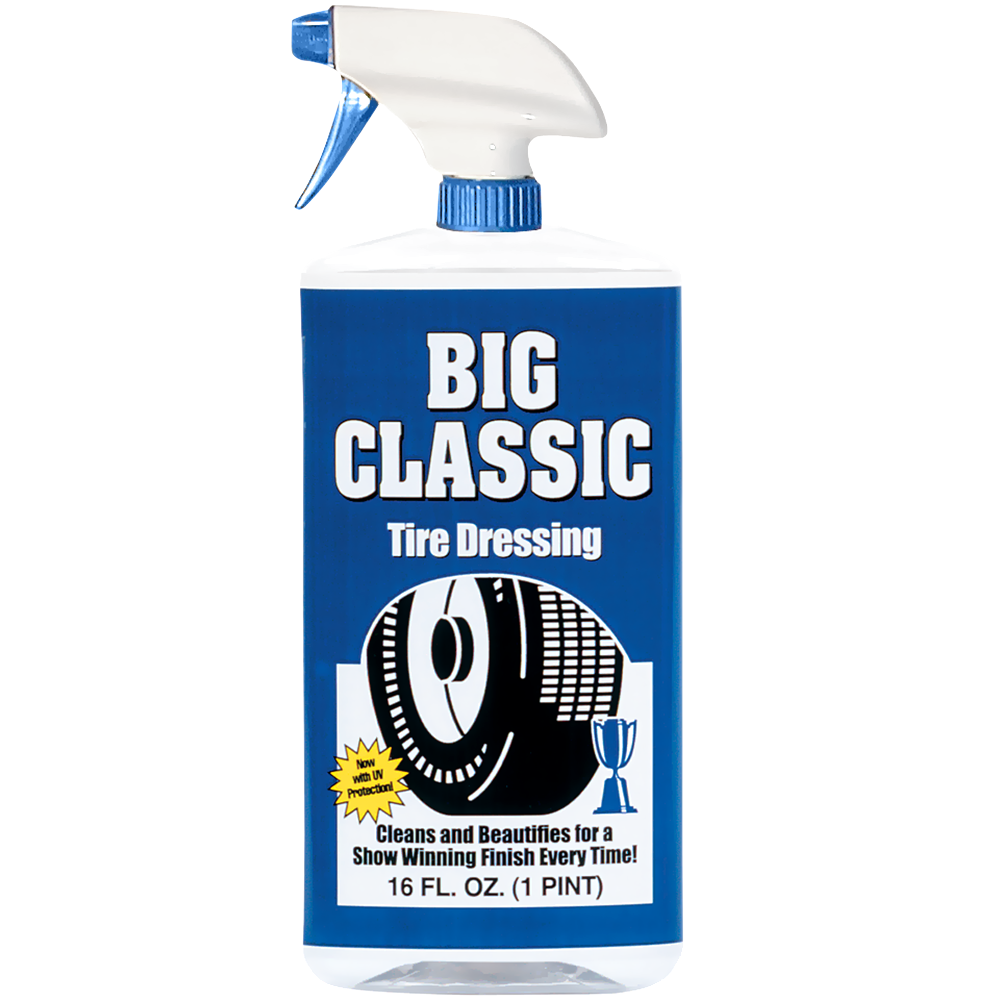
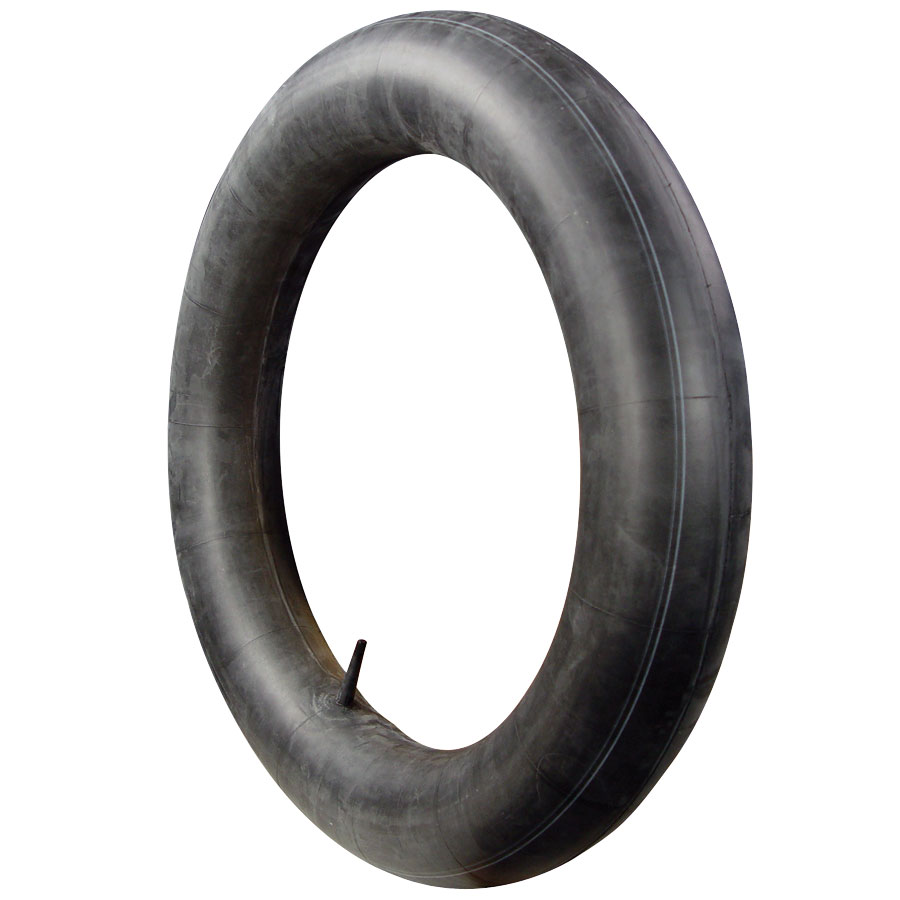


Popular Add-Ons For Your Order
More Tires This Size