

Filter By
Original Equipment Wheels
Browse hundreds of authentic original equipment style wheels from the world's leading supplier of collector tires and wheels. Chevy rally wheels are one of the most popular styled steel wheels of all time. Our Chevrolet Rallye wheels are made in the USA with modern equipment in hundreds of configurations. Choose your diameter, width, offset and from many authentic accessories and caps. We also carry the legendary Magnum 500 wheel, Pontiac Rallye wheels and more reproduction OE wheels, perfect for your restoration.


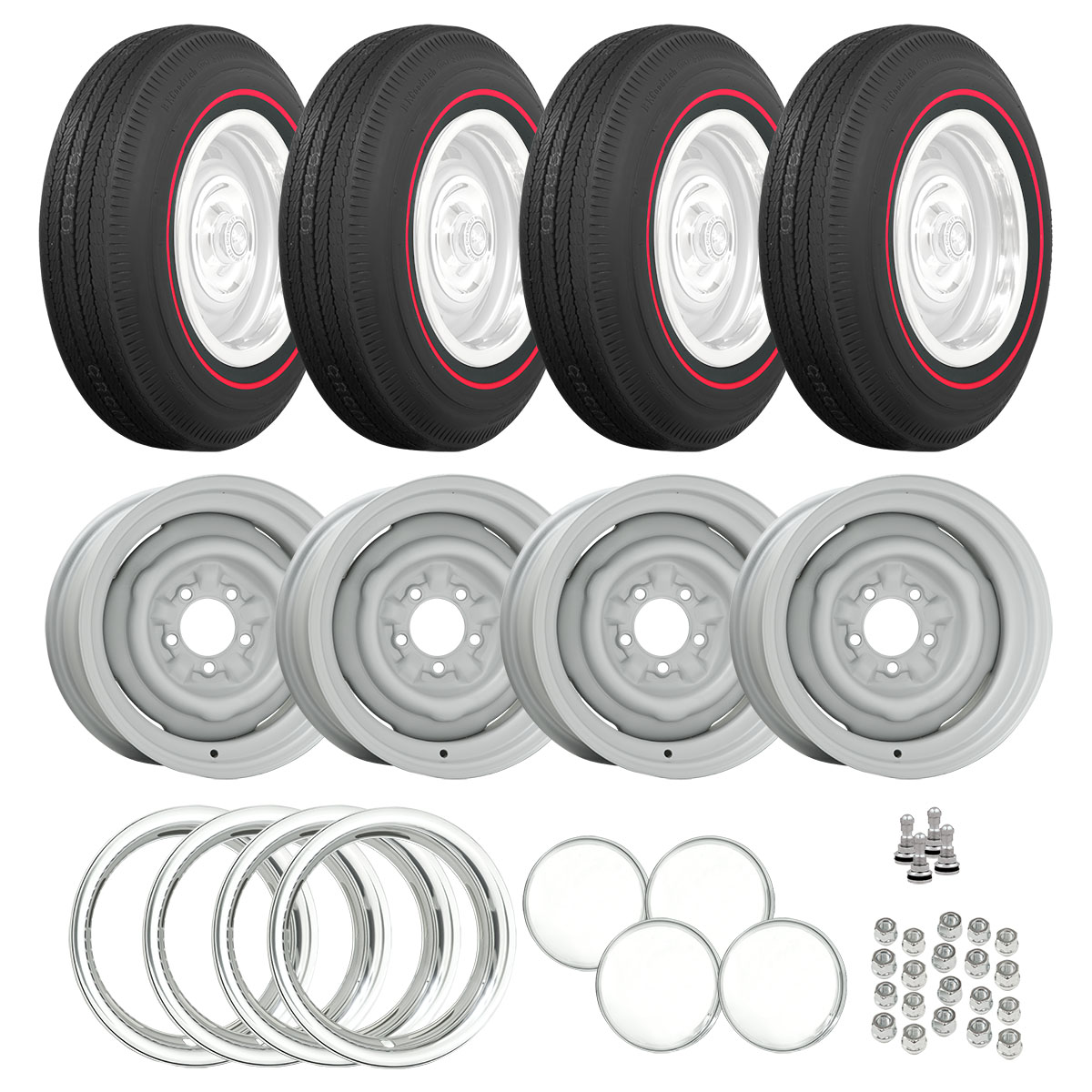

Put the Original back in your in OE project.
Frequently Asked Questions
Purchase Considerations ▼
Will OE-style wheels work with my existing wheel and tire setup? ▼
OE-style wheels can work with your existing setup when their diameter, width, bolt pattern, and backspacing match your vehicle's requirements. Coker Tire's Original Equipment collection includes several wheel diameters and widths, with different bolt patterns and backspacing options. These specifications determine whether a wheel can mount correctly, accommodate the tire, and sit properly within the wheel opening. The fact that a wheel is described as OE-style does not automatically make it compatible with every classic vehicle.
Before purchasing, compare the replacement wheel's specifications with your current setup and the vehicle manufacturer's requirements. Also confirm that your tire is approved for the selected wheel width. Differences in diameter or width can affect tire fit, while incorrect backspacing can change wheel position and cause clearance issues.
Are there fender or suspension clearance concerns with OE-style wheels? ▼
Yes. Fender and suspension clearance depend on the wheel's width, diameter, and backspacing, not simply its OE-style appearance. Backspacing determines how far the wheel sits inward from its mounting surface, affecting its position relative to suspension components and the vehicle's bodywork. Coker Tire's Original Equipment collection includes different backspacing options, so selecting the correct measurement is important for maintaining suitable clearance and the intended factory stance.
Check clearance at both the inner and outer edges of the wheel, including around suspension components, steering parts, and fenders. Also consider movement under steering and suspension compression, since a wheel that clears when the vehicle is stationary may rub during driving. Modified ride height or suspension components can further change the available space.
Will OE-style wheels clear upgraded brakes on my vehicle? ▼
Some OE-style wheels can accommodate modern brake upgrades, but compatibility depends on the wheel's internal design and dimensions. Coker Tire notes that many OE-style wheels are manufactured to work with updated brake systems, allowing owners to retain a factory-inspired appearance while upgrading braking components. However, this should not be taken as confirmation that every wheel in the Original Equipment collection will clear every aftermarket brake kit.
Before purchasing, verify the brake manufacturer's wheel-clearance requirements against the specific wheel. Check the space available around the caliper, rotor, and other brake components, including the inner barrel and spoke profile. A matching bolt pattern alone does not guarantee brake clearance. Confirm fitment for the exact wheel and brake combination before installation.
What should I check before purchasing OE-style wheels for a modified vehicle? ▼
For a modified vehicle, check the wheel's diameter, width, bolt pattern, and backspacing against the current suspension, brake, and tire setup. Coker Tire's Original Equipment collection offers multiple combinations, including different wheel sizes, bolt patterns, and backspacing measurements. These details matter because modifications such as upgraded brakes, altered suspension components, or changes in ride height can affect fitment even when the wheel was originally designed for a similar vehicle.
Also verify tire compatibility with the selected wheel width, lug nut seat and hardware requirements, and clearance through the full range of steering and suspension movement. Consider whether the wheel's position changes the vehicle's stance or creates rubbing under load. Confirm all measurements for the actual modified setup rather than relying only on the vehicle's original factory specifications.
Appearance & Styling ▼
How do painted and chrome finishes influence OE wheel appearance? ▼
Painted finishes tend to emphasize authenticity and factory-correct styling. Colors such as silver, black, or body-matched tones were commonly used by manufacturers and help maintain a period-accurate look.
Chrome finishes create a brighter and more attention-grabbing appearance. While some chrome options were available historically, they are more often associated with custom or upgraded builds. The choice between painted and chrome finishes allows enthusiasts to lean toward either originality or added visual impact.
What era of automotive design do OE wheels reflect? ▼
OE wheels reflect the design trends of the specific era in which the vehicle was produced. For many classic American vehicles, this includes the 1950s through the 1970s, when stamped steel wheels and styled factory options became more common.
Each era introduced subtle changes in styling, from simple painted wheels to more detailed designs with trim and accents. These variations help define the visual identity of different generations and are an important part of accurate restorations.
Measurements & Compatibility Basics ▼
What measurements matter most when selecting OE-style wheels? ▼
The most important measurements include diameter, width, bolt pattern, and backspacing. Diameter influences tire selection and overall appearance, while width affects tire fit and stance.
Bolt pattern determines whether the wheel will mount correctly to the vehicle, and backspacing controls how the wheel sits within the wheel opening. Understanding these measurements ensures proper fit and maintains both function and visual balance.
What role does bolt pattern play in OE wheel selection? ▼
Bolt pattern is essential for ensuring the wheel mounts securely to the vehicle. It refers to the number of lug holes and the spacing between them.
Different manufacturers used different bolt patterns, so matching this specification is critical. Without the correct bolt pattern, the wheel cannot be installed safely or properly.
Why is backspacing important for OE-style wheels? ▼
Backspacing determines how far the wheel sits inward or outward relative to the mounting surface. Proper backspacing ensures clearance with suspension components and bodywork.
Incorrect backspacing can lead to rubbing or improper positioning within the wheel opening. Maintaining correct backspacing helps preserve both function and the intended factory stance.
Are OE-style wheels compatible with modern brake systems? ▼
Many OE-style wheels are designed to accommodate modern brake upgrades, especially when produced with updated manufacturing methods. This allows enthusiasts to maintain a factory look while improving braking performance.
However, compatibility depends on internal wheel design and dimensions. Considering how the wheel interacts with brake components is important when planning upgrades.
Do OE wheels require specific lug nut styles? ▼
Yes, OE wheels often require specific lug nut styles, typically conical seat designs. This ensures the wheel is properly centered and securely fastened.
Using the correct lug nuts helps prevent installation issues and maintains safety. Matching hardware to the wheel design is an important detail that should not be overlooked.
Vehicle Applications & Usage ▼
Why are OE-style wheels still popular among enthusiasts? ▼
OE-style wheels remain popular because they offer authenticity, reliability, and timeless design. They reflect the original character of the vehicle and are closely tied to its history.
Enthusiasts value this connection, especially in restoration and preservation projects. The ability to maintain a factory-correct appearance while using modern reproductions adds to their appeal.
Maintenance, Performance & Longevity ▼
How should OE wheels be cleaned and maintained? ▼
Cleaning OE wheels involves using mild soap and water along with a soft cloth or brush. This helps remove dirt and brake dust without damaging the finish.
Regular maintenance prevents buildup and preserves both appearance and function. Keeping the wheels clean also helps identify any potential issues early.
What helps extend the life of OE-style wheels? ▼
Extending the life of OE wheels involves regular cleaning, proper installation, and routine inspection. Keeping them free from contaminants helps protect the finish.
Ensuring correct lug nut torque and avoiding harsh impacts also contributes to longevity. These practices help maintain both function and appearance over time.
Wheel Construction & Durability ▼
What materials are commonly used in OE-style wheels? ▼
OE-style wheels are typically made from stamped steel or cast aluminum. Steel wheels are known for their strength and authenticity, while aluminum options offer reduced weight and improved corrosion resistance.
Each material serves a different purpose depending on the intended use. The choice often depends on whether the focus is originality or performance.
Are OE wheels built for long-term use? ▼
OE wheels are designed for long-term use under normal driving conditions. Their construction reflects factory standards for durability and reliability.
When properly maintained, they can last for many years without significant issues. This makes them a dependable choice for classic vehicle ownership.